
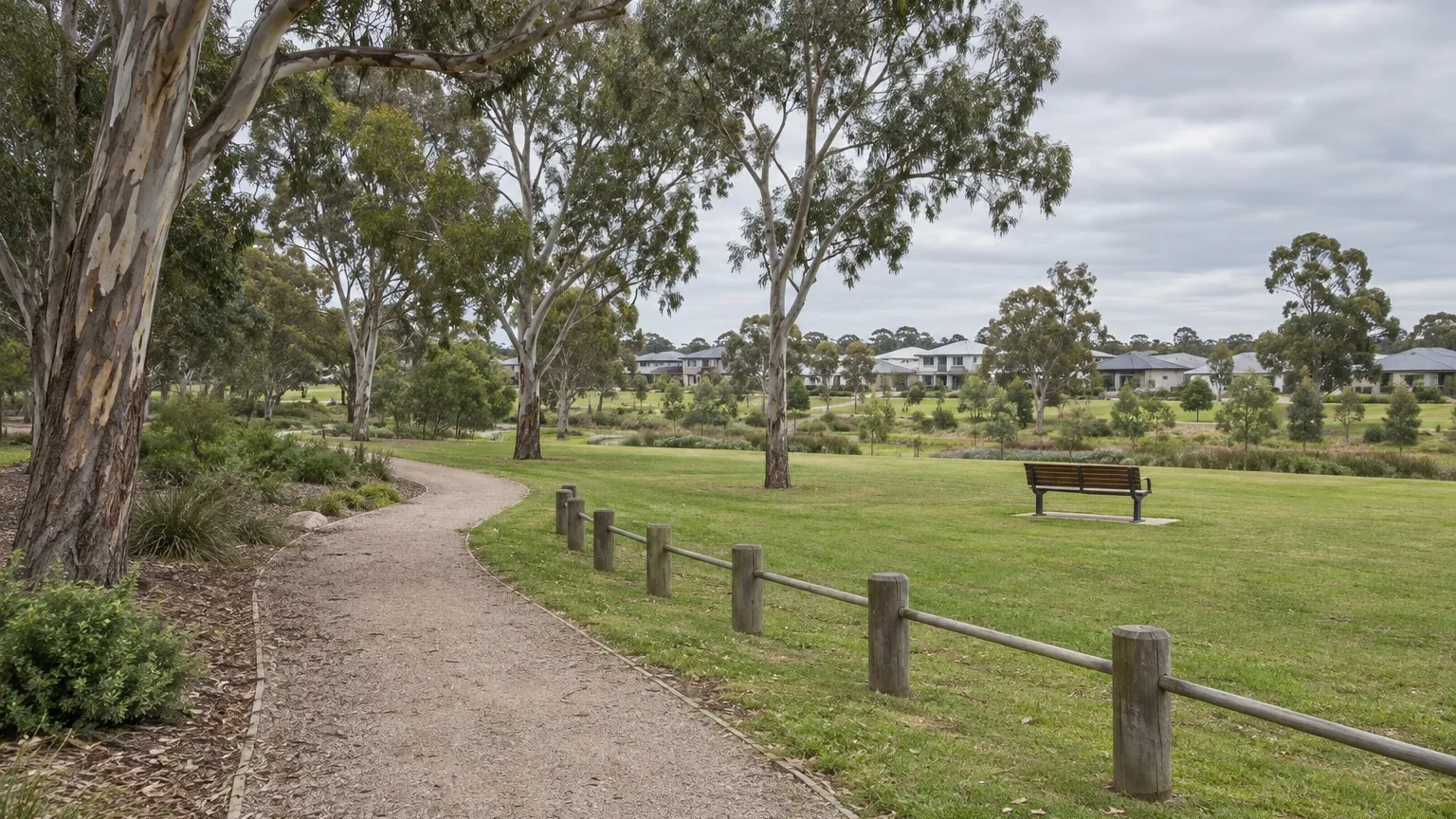
You have found a block in Victoria with the right dimensions for three lots, and the arithmetic on the residual land value works. Then the council's open space requirement lands, and it is not a fee on the rates notice. It is a percentage of the land you were going to sell, or a percentage of its value in cash.
On a tight subdivision, five per cent can be the whole margin.
The deal question: land, money, or both?
Section 18(1) of the Subdivision Act 1988 gives the council a choice, and gives you a choice too. The council may require you to set aside on the plan, for public open space in a location satisfactory to the council, a percentage of all of the land in the subdivision intended to be used for residential, industrial or commercial purposes, not exceeding 5 per cent. Or it may require you to pay or agree to pay a percentage of the site value of that land, not exceeding 5 per cent. Or it may require a combination of the two, so that the total does not exceed 5 per cent of the site value. The authorised Subdivision Act 1988 sets this out in full.
That means the first feasibility decision is not the lot count. It is which form of contribution you will be negotiating, because setting aside land and paying cash affect the deal in completely different ways. Land reduces your saleable area. Cash hits your bank account immediately before registration.
The checks a student would run, in order
- Confirm the requirement exists before you design the layout. Section 18(1A) allows the council to make a requirement only if it considers there will be a need for more open space as a result of the subdivision. Ask what the council's view is on your site.
- Find out the percentage the council applies. Section 18(4) allows you and the council to agree a different percentage, and a planning scheme can specify its own requirement under section 18A. The statutory maximum is not necessarily the number you will be asked for.
- Test whether the land can physically be set aside. The location must be satisfactory to the council. A 5 per cent strip in the wrong corner of the site is not the same asset as 5 per cent of saleable land.
- Check for an exemption. Section 18(8) lists cases where a requirement is not required at all. Read it against your actual subdivision.
- Price the cash alternative. If payment applies, the amount is a percentage of site value, so the valuation is the number that matters, not the purchase price.
- Check the valuation date. Section 19 requires the land to be valued on a day not more than 12 months before the date for compliance, and the council must give you a copy.
- Place the payment against the programme. Section 18(1B) requires payment before the council issues its statement of compliance. That is the moment before registration.
- Re-run the residual land value. Model the requirement as a funded cost and then check the offer price you can still pay.
Timing is where this hurts
The payment timing is not negotiable in the way students assume. Section 18(1B) provides that where the council requires an amount to be paid, it must be paid before the council issues its statement of compliance, and that subject to that, the time for payment is at the applicant's discretion. Section 18A applies the same requirement where the open space requirement is specified in a planning scheme, and permits part of the amount to be paid after the statement of compliance in some circumstances.
In practice the obligation sits at the worst point in the cash flow: after the construction and statutory costs have been spent, and before any lot can be registered and sold or refinanced. If you have modelled the contribution as a percentage of revenue rather than a payment with a date, your peak debt is understated. The Subdivision Act 1988 on legislation.vic.gov.au confirms the current in-force status and version history, so you can check you are reading the version that applies. The requirement can also come from the planning scheme itself rather than from the council's own decision, which is why the Planning and Environment Act 1987 matters to this analysis: it is the instrument framework in which a planning scheme imposes a public open space requirement and in which a statement of compliance is issued under section 21 of the Subdivision Act 1988.
The trap: leaving open space out until the plan is drawn
The common mistake is to design the lot layout first, then discover the open space requirement, then try to carve a parcel out of the finished plan. By then the layout is committed, the parcel takes saleable land, and the location is unlikely to satisfy both the council and the geometry. The requirement has to be an input to the design, not a deduction from it.
The second trap is assuming the 5 per cent maximum is a fixed rate. It is a ceiling. What applies on your land depends on the council, the planning scheme and the matters in section 18(1A), and some schemes specify their own requirement under section 18A. A student who budgets the maximum and does not check is over-budgeting, and a student who assumes zero and does not check is under-budgeting. Both are guesses.
The third trap is the revaluation risk. Section 19 provides that if the requirement is not complied with within 12 months after it is required, the council may obtain a revaluation at each anniversary and vary the requirement accordingly. A project that runs long can therefore find the open space contribution moving, and not in your favour if land values have risen.
How to brief this properly
You are not expected to interpret the Subdivision Act 1988, negotiate a planning scheme requirement or argue a valuation. Your job is to find out the requirement early enough that it changes the design rather than the outcome. A town planner should confirm what the planning scheme and the council require for open space on that land, including whether an exemption applies. A licensed surveyor should test whether the required land can be set aside in a location the council will accept, and how that affects the plan and the lot yield. A property lawyer should confirm the statement of compliance process and the payment obligation before you commit. Your finance broker or lender should confirm how the payment timing affects your funding and peak debt, and an accountant or tax adviser should confirm its treatment. All of them should work from the current instrument for the specific council area.
Practical next steps checklist
- Ask the council in writing what open space requirement applies to the site.
- Establish whether it will be satisfied in land, money or a combination.
- Test both forms against your lot yield before you finalise the layout.
- Check section 18(8) and any planning scheme exemption against your subdivision.
- Confirm whether the requirement is set by the council under section 18 or by the scheme under section 18A.
- Get the valuation basis and date confirmed, and diarise the 12-month revaluation point.
- Model the payment as an amount with a date immediately before the statement of compliance.
- Re-test the offer price you can pay after the requirement is funded.
Key takeaway
In Victoria, public open space is a cost of subdividing, capped at 5 per cent of the land or the site value but payable on a date set by the statement of compliance. Establish the requirement before you design the layout, confirm which mechanism and percentage apply, and let your planner, surveyor, lawyer and lender confirm the specifics for the actual land.
Reader question: on your last subdivision, did the open space requirement shape the layout, or did you discover it after the plan was drawn?
Sources and boundaries
Sources checked 26 September 2026. Jurisdiction and limits: Victoria specific information. The provisions described are sections 18, 18A, 19 and 21 of the Subdivision Act 1988 (Vic), as those sections read in authorised version 085 in force from 9 September 2026, together with the surrounding framework in the Planning and Environment Act 1987. Whether a public open space requirement is imposed on a particular subdivision, at what percentage, and whether it is satisfied in land, money or a combination, depends on the relevant municipal council, on the planning scheme and any schedule applying to the land, and on the matters the council must consider under section 18(1A). Exemptions depend on the planning scheme and on the council's view of the specific subdivision. Councils and planning schemes change, values move, and the valuation date affects the amount. Nothing here applies outside Victoria. This is general information only. Confirm the current requirement, the applicable percentage, any exemption and the valuation basis with the relevant council, your town planner, a licensed surveyor and your own legal and financial advisers before you commit money or register a plan.
- Victoria — Subdivision Act 1988 (No. 53 of 1988), authorised version 085, in force from 9 September 2026. Used for: section 18(1) allowing a council to require an applicant either to set aside on the plan, for public open space in a location satisfactory to the council, a percentage of all of the land in the subdivision intended to be used for residential, industrial or commercial purposes not exceeding 5 per cent, or to pay or agree to pay a percentage of the site value of that land not exceeding 5 per cent, or a combination of both not exceeding 5 per cent of the site value; section 18(1A) allowing a council to make a public open space requirement only if it considers there will be a need for more open space having regard to the matters listed, including existing and proposed use or development, likely population density, existing places of public resort or recreation and council policies; section 18(1B) requiring the amount to be paid before the council issues its statement of compliance, with the time of payment otherwise at the applicant's discretion; section 18(4) allowing the applicant to agree a different percentage; section 18(5) providing that a public open space requirement may be made only once in respect of the land; section 18(7) allowing a refund if it is no longer intended to subdivide; section 18(8) setting out when a requirement is not required, including a class of subdivision exempted by the planning scheme, excising land transferred to a public authority, council or Minister for a utility installation, and a two-lot subdivision where the council considers further subdivision unlikely; section 18A for a requirement specified in a planning scheme; section 19 on valuation, including that land is to be valued on a day not more than 12 months before the date for compliance, that the council must give the applicant a copy of the valuation, and that the council may obtain a revaluation at each anniversary if the requirement is not complied with within 12 months; and section 21 on the statement of compliance with statutory requirements (Checked 26 September 2026)
- Victoria — Subdivision Act 1988 (in force) on legislation.vic.gov.au. Used for: the current in-force status and version history of the Subdivision Act 1988 (Act number 53/1988), including that the Act is in force and that version 085 took effect on 9 September 2026, confirming which authorised text the quoted sections are taken from (Checked 26 September 2026)
- Victoria — Planning and Environment Act 1987 (No. 45 of 1987), authorised version in force 2026. Used for: the framework in the Planning and Environment Act 1987 that sits around subdivision, including that a statement of compliance is a statement issued under section 21 of the Subdivision Act 1988, and that the planning scheme is the instrument that can impose its own public open space requirement and that can exempt classes of subdivision (Checked 26 September 2026)
This article is general education, not personalised planning, legal, financial, tax, privacy, safety or building advice. Requirements and outcomes vary by jurisdiction, site, contract, structure and circumstances. Check current information with the relevant authority and appropriately qualified advisers.
 Learn with Jason & AmyBuild practical small-scale property development skills with experienced mentors.Enquire now
Rate this article
Guest rating: select 1 star for poor or 5 stars for great. No account is required.
Leave a comment
Join the discussion. Your email address will not be published.
Frequently asked questions
How much can a Victorian council actually require for open space?
Up to 5 per cent, and the choice of how it is taken is partly yours. Section 18(1) of the Subdivision Act 1988 allows the council to require you either to set aside on the plan, for public open space, a percentage of all of the land in the subdivision intended to be used for residential, industrial or commercial purposes, not exceeding 5 per cent; or to pay or agree to pay a percentage of the site value of that land, not exceeding 5 per cent; or to do a combination of the two so that the total does not exceed 5 per cent of the site value. Section 18(4) also allows you and the council to agree a different percentage.
Can the council impose this on any subdivision it likes?
No. Section 18(1A) provides that the council may only make a public open space requirement if it considers that, as a result of the subdivision, there will be a need for more open space, having regard to listed matters. Those include the existing and proposed use or development of the land, any likelihood that existing open space will be more intensively used after the subdivision, any existing or likely population density in the area and the effect of the subdivision on it, whether there are existing places of public resort or recreation in the neighbourhood and the adequacy of those, how much of the land is likely to be used for places of resort and recreation for lot owners, and any council policies concerning the provision of places of public resort and recreation.
When is the money actually payable?
Before the statement of compliance is issued, and that date drives your cash flow. Section 18(1B) provides that where a council requires payment, the amount must be paid before the council issues its statement of compliance, and that subject to that, the time for payment is at the applicant's discretion. Section 18A makes the same requirement for an open space requirement specified in a planning scheme, and it also allows the whole or part of the amount to be paid after the council has issued the statement of compliance in some circumstances. The practical point is that the payment sits immediately before registration, which is exactly where your funding is tightest.
What if I disagree with the council's valuation?
There is a process for that. Section 19 allows the council to obtain a valuation for the purposes of section 18 or 18A or a public open space requirement in a planning scheme from a person holding the qualifications or experience specified under the Valuation of Land Act 1960 if the value is not agreed. The land is to be valued on a day not more than 12 months before the date for compliance with the requirement, and the council must give the applicant a copy of the valuation. If the requirement is not complied with within 12 months after it is required, the council may obtain a revaluation at each anniversary and vary the requirement accordingly. That revaluation mechanism is a real cost risk on a slow project.
Are any subdivisions exempt?
Yes, and you should check before you assume you carry the cost. Section 18(8) provides that a public open space requirement is not required if the subdivision is of a class exempted from the requirement by the planning scheme; if the subdivision is for the purpose of excising land to be transferred to a public authority, council or a Minister for a utility installation; or if the subdivision subdivides land into two lots and the council considers it unlikely that each lot will be further subdivided. Section 18(5) also provides that a requirement may be made only once in respect of the land, and section 18(7) allows a refund if the council is satisfied it is no longer intended to subdivide the land to create any additional lot. Whether an exemption applies to your land is a question for the council and your planner.
Loading comments…