
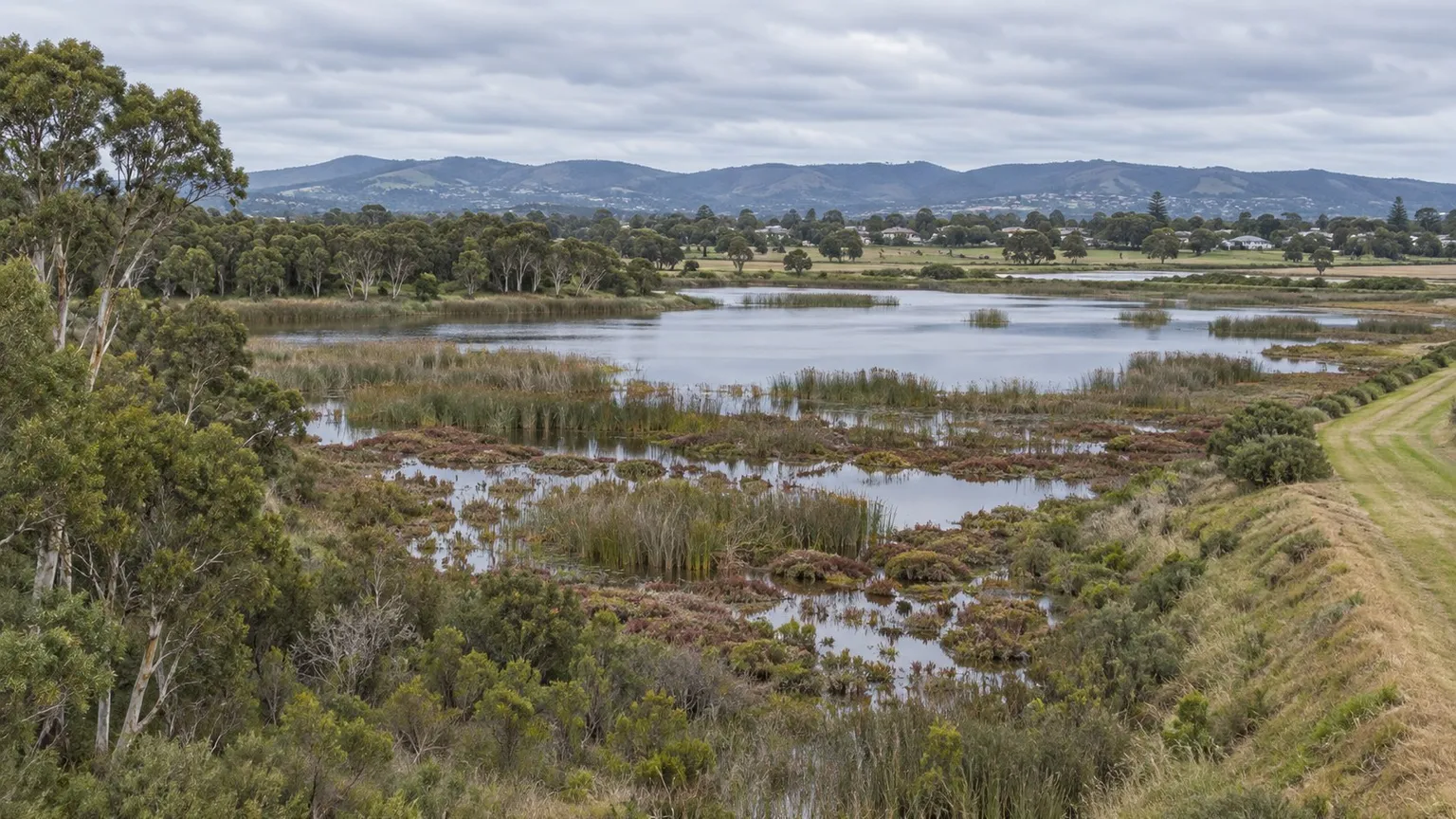
You find a site that works on the state numbers. The zoning supports the density, the planner is comfortable, and the layout produces the lots the feasibility needs. There is a damper corner of the block with reeds, and a strip of old timber along the rear boundary.
None of that appears in the state approval pathway you have been working through. It appears in a second one, administered from Canberra, that applies in every state and every territory at the same time.
The deal question: could your action significantly affect a protected matter?
The Commonwealth EPBC Act framework asks a question that is deliberately separate from planning. The department's own page states that if you are planning a project, also called an action, that might have an impact on protected matters, you may need to refer it to the department for assessment. It also states the department's expectation directly: tell it how you will build improved environmental outcomes into your project from the start, and refer the project if it will have a significant impact.
So the feasibility question is not about zoning or yield. It is: does this action have, or is it likely to have, a significant impact on a protected matter?
How the Act defines the problem
The statutory test is short and worth reading in full. Section 67 of the Environment Protection and Biodiversity Conservation Act 1999 provides that an action that a person proposes to take is a controlled action if the taking of the action by the person without approval under Part 9 for the purposes of a provision of Part 3 would be prohibited by the provision, apart from certain savings provisions that do not change the shape of the test. The provision is a controlling provision for the action.
That definition is worth understanding because it explains why the Commonwealth question cannot be answered by the council. Whether your action is prohibited by a Part 3 provision depends on the protected matter and on the significance of the impact, not on the local planning instrument.
The Part 3 provisions are grouped by protected matter. Section 16 deals with declared Ramsar wetlands: it provides that a person must not take an action that has or will have a significant impact on the ecological character of a declared Ramsar wetland, or is likely to have such an impact. Section 18 deals with listed threatened species and communities and provides that a person must not take an action that has or will have a significant impact on a listed threatened species included in the extinct in the wild category, or is likely to have such an impact, with the equivalent provisions applying to other listed categories.
Those two sections are the ones that most often touch small-scale development, because remnant vegetation, habitat and water features are exactly what a subdivision on the urban fringe tends to encounter.
The trap: taking the action before the question is answered
The prohibition is not a policy preference, and it is not enforced after the fact by a fine that sits comfortably inside a contingency. Section 67A provides that a person must not take a controlled action unless an approval of the taking of the action is in operation under Part 9 for the purposes of the relevant provision of Part 3, or a determination under section 79E is in force and the action is taken in accordance with its conditions, or another listed exception applies.
That matters at the earliest stage of a project. Clearing, earthworks, demolishing a structure, draining a water body or changing the hydrology of a wetland can each be part of the action, and the action is assessed as a whole. A builder who mobilises while the referral is still being considered is taking the action, and so is the person who directed it.
This is why the Commonwealth question belongs in due diligence, next to the title search and the survey, rather than in the construction programme.
Why a state approval does not settle it
The single most expensive misunderstanding in this area is treating the Commonwealth question as a duplicate of the state one. They are different instruments, administered by different bodies, and they define their problems differently.
Your state or territory pathway may be about a planning permit, a development application, a clearing threshold, an offset scheme or a water approval. Those systems have their own protected matters, their own thresholds and their own assessment methods. The Commonwealth Act asks whether the action will have a significant impact on a matter protected under Commonwealth law, and the answer comes from an ecological assessment of the site combined with a current protected matters search.
Both can apply to the same block. A state biodiversity assessment, for example, might conclude that a clearing area sits below a threshold that triggers a state offset, while a Commonwealth assessment might find that the same vegetation is habitat for a listed species. One answer does not imply the other.
How the referral decision is actually made in practice
The department's published guidance is to refer if the project will have a significant impact on protected matters. The practical sequence that makes that decision defensible is:
- Survey the site properly. An ecological consultant records the vegetation, the condition, any water features, habitat values and any evidence of listed species or communities.
- Run a current protected matters search for the exact location, and read the result against what the survey found rather than against what the block looks like from the road.
- Test the significance question on the actual proposal: what the action clears, drains, fills, lights or changes, and how that affects the protected matter.
- Change the design if you can. The cheapest outcome is a layout that avoids the impact entirely, which removes the referral question rather than answering it.
- Document the decision either way. If you decide not to refer, record the assessment and the reasons, because that file is your evidence if the question is raised later.
- Sequence the programme so that no part of the action is taken before the Commonwealth position is resolved.
What it does to the feasibility
Price three things before you commit: the ecological assessment, the referral and assessment process if it applies, and the design changes needed to avoid or reduce the impact. On a site with genuine habitat, the third number is usually the one that decides the deal, because avoidance can cost yield in a way that no approval fee ever will.
Then run the model twice: the layout that clears everything, and a layout that retains the habitat. If the retaining layout holds most of the yield, take it. It removes a Commonwealth question, a possible state offset and a reputational risk in a single decision, and it is much cheaper to make that call on paper than after exchange.
Practical next steps
You are not expected to solve this yourself. An ecological or environmental consultant surveys the site, identifies protected matters and assesses the likelihood and significance of impact. A town planner confirms how the Commonwealth question interacts with the state or territory pathway and whether a bilateral agreement or accredited process applies. A planning or environmental lawyer advises on the referral decision and on the risk of taking any part of the action before the Minister decides. Confirm the current protected matters search result for this exact site and the current referral requirements before you lodge, and before you commit to a programme.
Sources and boundaries
Sources checked 28 September 2026. Jurisdiction and limits: Australia-wide information, because the Environment Protection and Biodiversity Conservation Act 1999 is Commonwealth law that applies in every state and territory. The text relied on here is the compiled Act as registered on 2 September 2026, Compilation No. 70, compilation date 24 August 2026, and it must be checked against the current in-force compilation at the time of use. The Act is not a substitute for state, territory or local approvals, and each of those systems has its own protected matters, assessment pathways, thresholds and offset arrangements that must be checked separately. Whether an action is a controlled action, and whether it needs approval, depends on the specific action, the protected matters present on and near the site, and the significance of the likely impact; the department's own guidance and a site-specific ecological assessment determine that, not a general rule. Referral, assessment and approval timeframes and fees are set by the Act and are subject to change. This is general information only.
- Environment Protection and Biodiversity Conservation Act 1999 — Federal Register of Legislation (latest text). Used for: the Act's status as Commonwealth law in force, administered by the Department of Climate Change, Energy, the Environment and Water; the structure of Part 3 requirements relating to matters of national environmental significance; and the location of the referral and assessment provisions in Part 7 (Checked 28 September 2026)
- Environment Protection and Biodiversity Conservation Act 1999 — downloadable authorised version. Used for: the authorised compilation used for the section numbers and wording quoted in this article, being Compilation No. 70, compilation date 24 August 2026, registered 2 September 2026, downloaded as the three volume authorised PDF; section 67 defining a controlled action; section 67A prohibiting the taking of a controlled action without an approval in operation, a determination, or another listed exception; section 16 on actions with a significant impact on the ecological character of a declared Ramsar wetland; and section 18 on actions with a significant impact on listed threatened species or endangered communities (Checked 28 September 2026)
- Department of Climate Change, Energy, the Environment and Water — EPBC Act. Used for: that a person planning a project, also called an action, that might have an impact on protected matters may need to refer it to the department for assessment; and the department's guidance to tell it how improved environmental outcomes will be built into the project from the start and to refer the project if it will have a significant impact (Checked 28 September 2026)
This article is general education, not personalised planning, legal, financial, tax, privacy, safety or building advice. Requirements and outcomes vary by jurisdiction, site, contract, structure and circumstances. Check current information with the relevant authority and appropriately qualified advisers.
 Learn with Jason & AmyBuild practical small-scale property development skills with experienced mentors.Enquire now
Rate this article
Guest rating: select 1 star for poor or 5 stars for great. No account is required.
Leave a comment
Join the discussion. Your email address will not be published.
Frequently asked questions
What actually makes a subdivision a controlled action?
The Act defines it by reference to the prohibition. Section 67 provides that an action a person proposes to take is a controlled action if the taking of the action by the person without approval under Part 9 for the purposes of a provision of Part 3 would be, or would but for certain savings provisions be, prohibited by the provision, and that provision is the controlling provision for the action. In practical terms, the question is whether your action falls within one of the Part 3 provisions because of its likely impact on a protected matter. It is not decided by the zoning, the lot size or whether the council supports the application.
What happens if I take a controlled action without approval?
The Act puts the prohibition in section 67A. It provides that a person must not take a controlled action unless an approval of the taking of the action is in operation under Part 9 for the purposes of the relevant provision of Part 3, or a determination under section 79E is in force and the action is taken in accordance with its conditions, or one of the listed exceptions applies. That is why the referral decision belongs at due diligence stage. Starting site works before the question is resolved is a statutory risk, not merely a compliance preference.
Which protected matters are relevant to a normal residential subdivision?
The ones that are actually present, and the Act names several by category. Part 3 provisions include the requirement for approval of activities with a significant impact on a declared World Heritage property, on a National Heritage place, and section 16 on a declared Ramsar wetland, together with listed threatened species and ecological communities under section 18 and listed migratory species. For a small subdivision the live questions are usually remnant vegetation that provides habitat, water features and wetlands, and any listed species or community on or near the site. The list is not something you decide from a title search; it comes from a site survey and a current protected matters search.
How does this interact with my state approval?
They are parallel, not sequential, and one does not satisfy the other. The Act applies across Australia, and the department's own materials describe the referral and assessment process as the Commonwealth route for an action that might have an impact on protected matters. Your state or territory assessment may look at native vegetation and biodiversity through completely different instruments with different thresholds. In New South Wales that is the biodiversity offsets scheme and the area clearing threshold; in Western Australia it is the clearing permit framework. A state approval does not discharge a Commonwealth obligation, and the Commonwealth decision does not discharge the state one.
When should I refer, and when should I get advice instead?
The department's published position is to refer a project if it will have a significant impact on protected matters, and to build improved environmental outcomes in from the start. The genuine sequencing advice is that the significance question should be answered by an ecological assessment before you decide whether to refer, because the referral itself starts a statutory clock and creates a public record. If the assessment shows a real risk of significant impact, referring is the safer path. If it does not, your planner and lawyer should document why, and keep that reasoning on file. Either way, the decision is made on evidence rather than on the plan drawing.
Loading comments…