
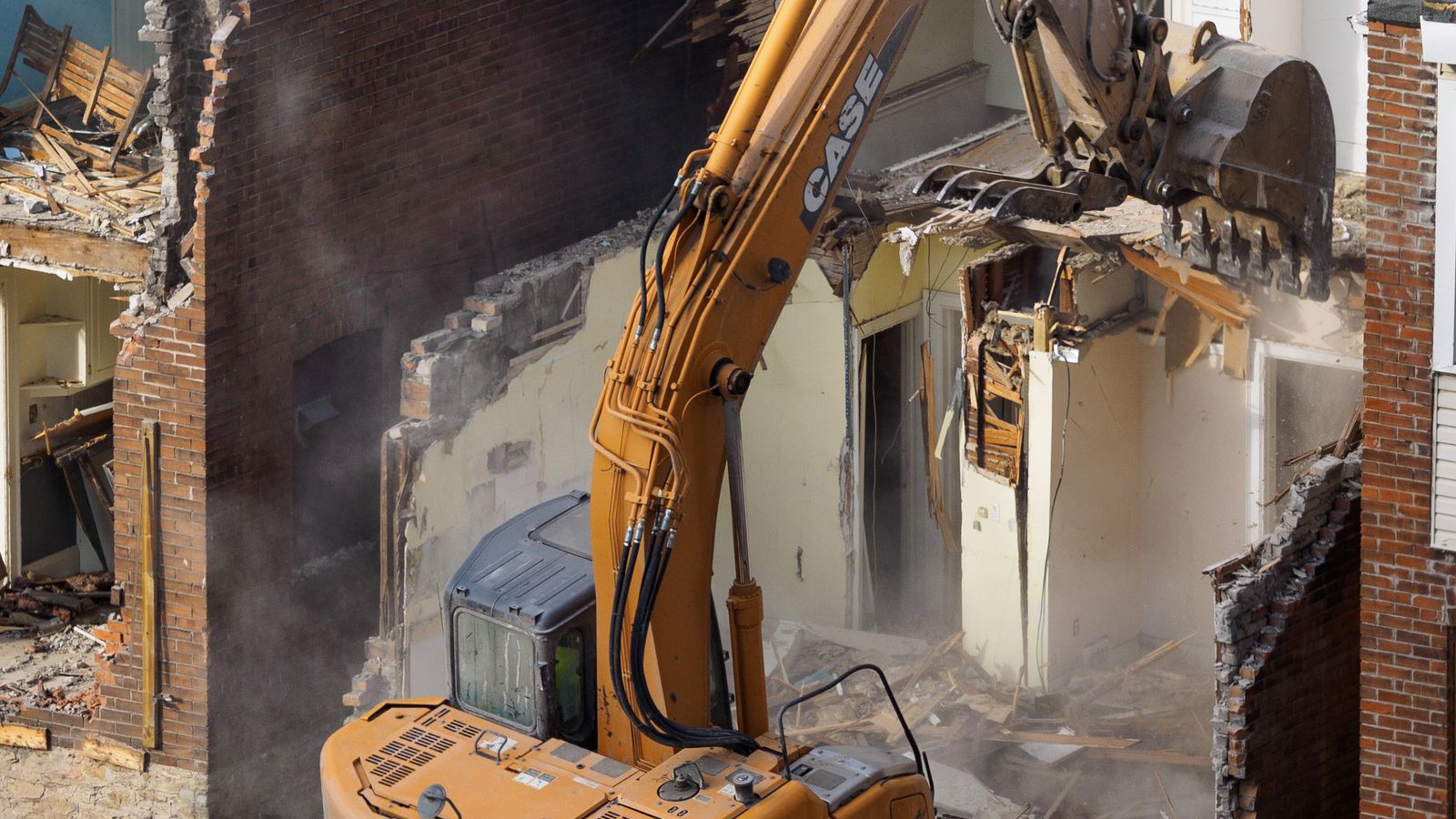
Before You Demolish: The Asbestos Check That Runs Before Your First Development Decision
A block can look like a simple knockdown-and-build and still carry a demolition cost you never priced. The single most common reason is asbestos. It is not a reason to walk away from an older house, but it is a reason to test the question before you rely on a feasibility.
This is the check that runs before your first development decision on an older dwelling, and it changes numbers in a way that is easy to miss.
Why an older house is a different kind of site
Asbestos-containing materials were widely used in Australian buildings for most of the twentieth century, and the Asbestos Product Guide published by the Asbestos and Silica Safety and Eradication Agency records where and when those products were used, including the brand names where they are known.
If asbestos material is in good condition it poses little health risk. The risk rises sharply when it is disturbed by cutting, drilling, water blasting or demolition, because fibres are released into the air. SafeWork NSW states that around 4000 Australians die every year from asbestos-related diseases, which it notes is double the road toll.
For a developer, that is not only a safety issue. It is a cost and programme issue, and it sits entirely inside your demolition line.
The threshold that actually changes your budget
The practical trigger most investors need to understand is licensing. On the SafeWork NSW asbestos guidance, a licensed professional must be used to remove friable asbestos, and also when there is more than 10 square metres of non-friable (bonded) asbestos. SafeWork NSW goes further and recommends using a licensed professional for any amount of non-friable asbestos because of the risk in disturbing it.
In plain terms: a few square metres of bonded sheeting and a whole fibro-clad dwelling sit in different regulatory and cost categories, even though both are 'an asbestos job'.
Victoria applies its own duties through WorkSafe Victoria, so if your site is outside NSW, do not carry an NSW assumption across state lines. Rules, licence classes and clearance processes differ by jurisdiction and by the type of material involved.
What the check looks like in practice
- Date the dwelling. Establish the construction era from title records, council records or a building inspection, then compare against the product guide's date ranges.
- Look before you cut. A competent person should inspect the actual materials in the areas you intend to disturb, not just the house generally.
- Separate friable from bonded. The licence class, control measures and cost depend on which you are dealing with and how much there is.
- Price removal as a separate line. Do not bury it in a demolition allowance, or you will never see the variance when it moves.
- Check clearance and disposal. Removal is not finished until clearance and lawful disposal are dealt with. The agency's householder guidance confirms that waste facilities often accept asbestos only at set times, and that you should contact the facility before transporting anything.
The TPC deal lens
Treat asbestos as a feasibility variable with three numbers attached: removal cost, programme delay, and the cost of the investigations you need to price it properly. A site that only works if asbestos is absent is not a site that works; it is a site with an unresolved cost.
A practical test before you exchange: if the asbestos question resolved badly, would the deal still clear your minimum margin? If the answer is nobody has priced it, you are not underwriting a deal, you are underwriting a hope.
Where investors get this wrong
- Assuming a demolition quote includes asbestos removal when it was never scoped that way.
- Treating the 10 square metre threshold as a free allowance rather than a licensing boundary.
- Reusing a cost estimate from a different state, where duties and licence classes differ.
- Leaving the investigation until after settlement, when the cost is yours and your options are gone.
The check is cheap relative to the decision. Do it while you still have the option to renegotiate, adjust the programme or walk away.
Next step: put a named asbestos line in the due diligence budget for any dwelling built before the mid-1980s, and get a competent person to look at what you actually intend to disturb.
Sources and boundaries
Sources checked 17 September 2026. Jurisdiction and limits: Australia (NSW and Victoria sources cited; licensing and duties differ by state and territory).
- Asbestos and Silica Safety and Eradication Agency. Used for: Australian Government agency for asbestos safety guidance, householder information and disposal contacts. (Checked 17 September 2026)
- Asbestos Product Guide (ASSEA). Used for: Images and descriptions of asbestos-containing materials that can still be found in Australia, including where and when they were used. (Checked 17 September 2026)
- SafeWork NSW — Asbestos. Used for: NSW licensing thresholds for removing friable and non-friable asbestos, asbestos professional roles and clearance requirements. (Checked 17 September 2026)
- WorkSafe Victoria — Asbestos. Used for: Victorian asbestos duties and licensing information for duty holders and homeowners. (Checked 17 September 2026)
- NSW EPA — Noise (regulator entry point). Used for: NSW environmental regulator; asbestos waste disposal is handled through the EPA or 131 555. (Checked 17 September 2026)
This article is general education, not personalised planning, legal, financial, tax, privacy, safety or building advice. Requirements and outcomes vary by jurisdiction, site, contract, structure and circumstances. Check current information with the relevant authority and appropriately qualified advisers.
 Learn with Jason & AmyBuild practical small-scale property development skills with experienced mentors.Enquire now
Rate this article
Guest rating: select 1 star for poor or 5 stars for great. No account is required.
Leave a comment
Join the discussion. Your email address will not be published.
Frequently asked questions
Does every older house contain asbestos?
No, and a house does not need to be fully clad in asbestos sheeting to create a real cost. Asbestos was used in many separate products, so the question is what specific materials are present in the areas you intend to disturb. The Asbestos Product Guide shows the range of products and date ranges to check against.
When do I legally need a licensed asbestos professional?
In NSW, a licensed professional is required to remove friable asbestos and to remove more than 10 square metres of non-friable (bonded) asbestos, and SafeWork NSW recommends a licensed professional for any amount of non-friable asbestos. Other states and territories set their own requirements, so confirm the rule for your jurisdiction.
Can I just add a contingency instead of investigating?
You can, but it is a poor substitute. A contingency is a buffer against uncertainty you have quantified; asbestos licensing thresholds and clearance requirements can create step changes in cost rather than a smooth percentage. Investigating first lets you price the actual obligation instead of guessing at it.
How much extra time should I allow in the programme?
Allow time for inspection, for the licence-holder to be engaged, and for clearance and lawful disposal before the next trade starts. The exact duration depends on the scope and the availability of licensed contractors, so it should be a scheduled activity rather than an allowance hidden inside demolition.
Would this change whether I buy the site?
It can. If the resolved cost of removal, delay and clearance still leaves the deal above your minimum margin, the constraint is manageable. If the deal only works when the asbestos question is assumed away, the site is not yet underwritten.
Loading comments…