
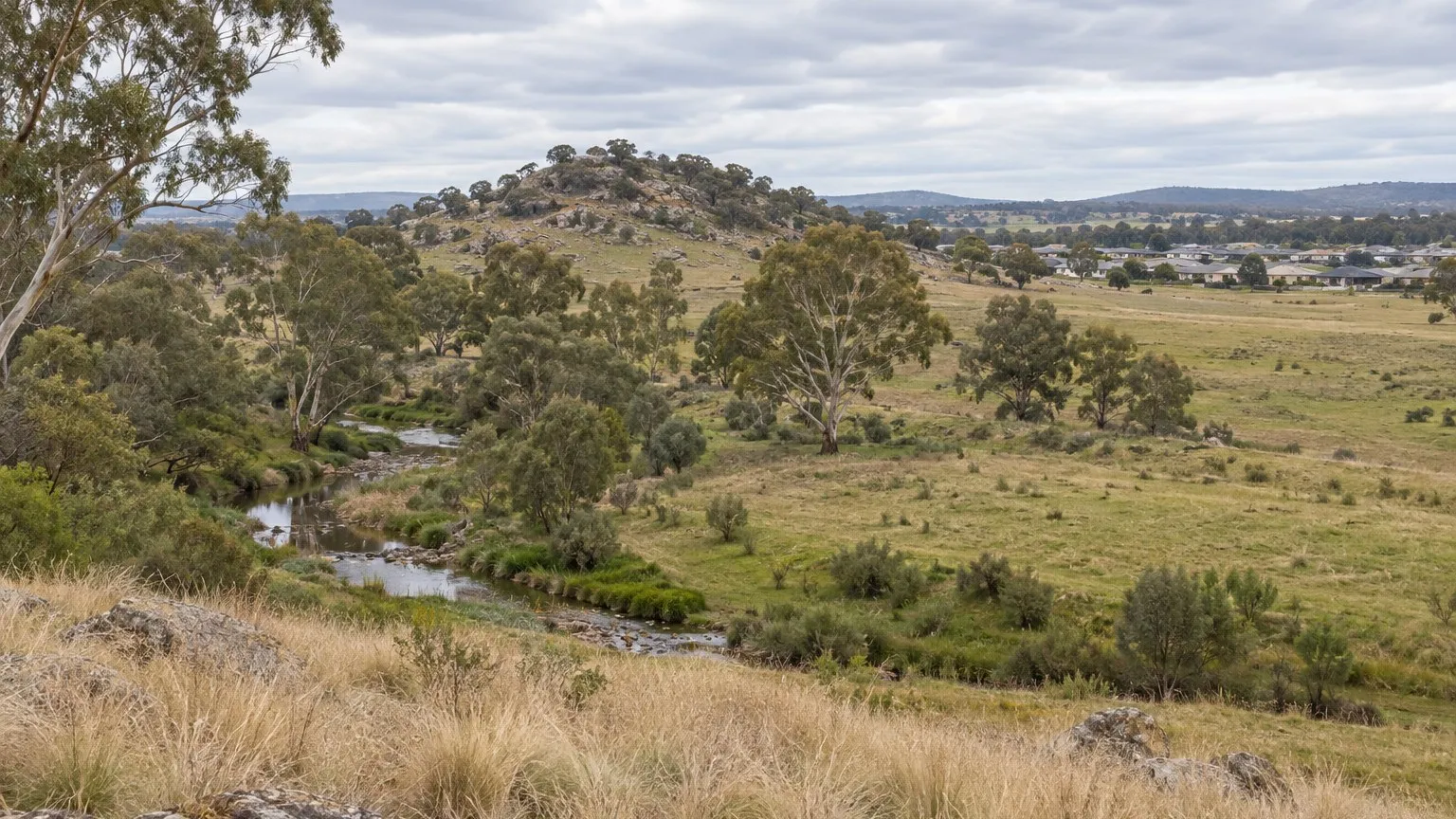
You find a site on the edge of a Victorian regional town. It is on the fringe, close to a creek line, mostly cleared, and the zoning looks workable. Then your planner tells you the land is mapped as an area of cultural heritage sensitivity and the proposal is a high impact activity.
That means no planning permit can be issued until a Cultural Heritage Management Plan has been approved. Not lodged alongside it. Approved first.
The deal question: which approval comes first?
Victoria's First Peoples - State Relations guidance on Cultural Heritage Management Plans states the sequence without ambiguity: where a CHMP is required, planning permits, licences and work authorities cannot be issued unless a CHMP has been approved for the activity. A CHMP is a written report prepared by a Heritage Advisor that contains the results of an assessment of the potential impact of the proposed activity on Aboriginal cultural heritage and outlines the measures to be taken before, during and after the activity to manage and protect it.
So the question that decides your programme is not whether you can get a permit. It is what has to be approved before the permit decision can lawfully be made.
The two-part test: high impact activity, culturally sensitive land
A CHMP is required when a high impact activity is planned in an area of cultural heritage sensitivity. Both terms are defined in the Aboriginal Heritage Regulations 2018 (Vic), and both have to be satisfied for the requirement to bite.
Areas of cultural heritage sensitivity include registered Aboriginal cultural heritage places, and also landforms and land categories that are generally regarded as more likely to contain Aboriginal cultural heritage. That second part matters for subdivision and infill work, because it can catch land that has never had a site recorded on it. The areas are shown on the online map, and where a proposal falls inside one, the Aboriginal Heritage Regulations Planning Tool helps determine whether the activity meets the definition of high impact activity.
Run both tests at feasibility. If you are relying on the land being clear because nothing has been found on it before, you are relying on the wrong thing.
Who does what, and why the roles are not interchangeable
The Victorian framework assigns specific roles, and getting them wrong wastes time.
- The Sponsor is the person seeking to undertake the activity or seeking the plan. The Sponsor prepares the management plan and must be a legal entity, such as a person or a company, and must engage a Heritage Advisor to assist.
- The Heritage Advisor must be a natural person, not a company, and must be appropriately qualified in a discipline directly relevant to managing Aboriginal cultural heritage, such as anthropology, archaeology or history.
- The Registered Aboriginal Party makes decisions about protecting and managing Aboriginal cultural heritage on behalf of the Traditional Owners over a specified geographical area, and evaluates management plans for that area. The Victorian Aboriginal cultural heritage framework sets out that role.
- The Secretary evaluates the plan where there is no relevant RAP, or where no RAP has responded within the timeframe, or where the relevant RAPs have told the Sponsor they do not wish to evaluate.
Registered Aboriginal Party boundaries are geographic and specific. Confirm which RAP is relevant to your activity area early, because the guidance describes early involvement as critical and the RAP may take part in the cultural heritage assessment itself.
The process, and where the time goes
The published process runs in a defined order.
- Notice of Intent. Submitted to the Secretary through ACHRIS with payment of the relevant prescribed fees, and provided to each relevant RAP, the owner or occupier of any land in the area, and the relevant municipal council. It must be given before preparation of the plan begins, including before any assessment.
- RAP response. Registered Aboriginal Parties have 14 days from receipt to respond in writing about whether they intend to evaluate the plan, and whether they intend to consult about the assessment or the conditions.
- Cultural heritage assessment. Three tiers, escalating on evidence. A desktop assessment is mandatory. A standard assessment, including a ground survey with systematic surface examination and examination of mature trees and caves or rock shelters, is required where the desktop shows heritage is reasonably possibly present. A complex assessment, involving disturbance or excavation, is required where its extent, nature and significance cannot otherwise be identified.
- Preparation and submission. The Sponsor must ensure the relevant authority receives the plan together with the associated statutory fee at the time of submission.
- Evaluation and determination. The relevant authority evaluates the plan against the objectives and requirements of the Aboriginal Heritage Act 2006 and decides to grant or refuse it.
- Review and disputes. Disputes between a Sponsor and a RAP, or between multiple RAPs, can be managed through informal and formal processes.
Read the 14 days as a floor, not a duration. The assessment tier, the ground survey, any complex excavation and the evaluation and determination all sit behind it.
The trap: sequencing the plan behind the design
The expensive mistake is designing first, costing the build, and then testing cultural heritage. If a complex assessment is required, you are excavating parts of the site before you lodge. If the assessment identifies heritage that cannot be avoided, your layout changes, and your design work is partly wasted.
The second trap is treating the plan as a document you can influence at the end. The RAP evaluates the plan, and where it elects to evaluate, the Sponsor must consult before the assessment begins and during preparation. Consultation is a process with a timetable, not a signature. Start it early or pay for it in hold time.
The site test a student would run, in order
- Check the sensitivity map for the activity area before you make an offer.
- Run the Planning Tool test to establish whether the proposal is a high impact activity.
- Identify the relevant Registered Aboriginal Party for that geography and its boundary.
- Budget the assessment tier — desktop, standard or complex — with the ground survey and any excavation costed into the feasibility.
- Map the sequence with the Notice of Intent, the 14 day response window, the assessment, the plan, the statutory fee and the evaluation placed ahead of your permit decision.
- Test avoidance before mitigation. Ask whether a layout that avoids the sensitive area entirely is cheaper and faster than assessing and managing it, then compare both on numbers.
What this does to the offer
Run the feasibility with a realistic cultural heritage allowance and a realistic pre-permit programme. If the second version of the numbers only works when the heritage cost and delay are small, you have found the risk in the deal, and it belongs in your price and your contingency rather than in an optimistic assumption about the assessment tier.
Where the site is genuinely constrained, the honest conclusion may be that the yield has to change. That is a feasibility outcome, not a failure, and it is far cheaper to reach before you exchange than after.
Practical next steps
You are not expected to solve this yourself. A town planner confirms the planning permit pathway and whether the activity is a high impact activity on land of cultural heritage sensitivity. A qualified Heritage Advisor, engaged by the Sponsor, prepares the plan and carries out the assessment. The relevant Registered Aboriginal Party evaluates it, so confirm the right body for your area and engage early. Take legal advice on the sponsor's obligations, the notice requirements and the prescribed fees. The specialist does the technical assessment and the authority determines the plan.
Sources and boundaries
Sources checked 27 September 2026. Jurisdiction and limits: Victoria specific information. The framework described is the Victorian Cultural Heritage Management Plan process under the Aboriginal Heritage Act 2006 (Vic) and the Aboriginal Heritage Regulations 2018, as described by the Victorian Government's First Peoples - State Relations guidance. Whether a particular activity is a high impact activity, and whether specific land is an area of cultural heritage sensitivity, is determined by the current regulations, the online cultural heritage sensitivity map and the Planning Tool, and is site specific. Registered Aboriginal Party boundaries, prescribed fees, forms and practice notes change, so confirm them at the time. New South Wales and the other states and territories use different Aboriginal cultural heritage frameworks and this guide must not be applied to them. This is general information only. Confirm the current requirement with the relevant Victorian authority, your town planner and a qualified Heritage Advisor before you commit money or sign anything.
- First Peoples - State Relations (Victorian Government) — Cultural Heritage Management Plans. Used for: the statement that a Cultural Heritage Management Plan is a written report prepared by a Heritage Advisor that includes the results of an assessment of the potential impact of a proposed activity on Aboriginal cultural heritage and outlines measures to be taken before, during and after an activity; that a CHMP is required when a high impact activity is planned in an area of cultural heritage sensitivity, with those terms defined in the Aboriginal Heritage Regulations 2018; that in those circumstances planning permits, licences and work authorities cannot be issued unless a CHMP has been approved for the activity; that areas of cultural heritage sensitivity include registered Aboriginal cultural heritage places as well as landforms and land categories generally regarded as more likely to contain Aboriginal cultural heritage; that the Sponsor must be a legal entity and must engage a suitably qualified Heritage Advisor, who must be a natural person rather than a company; that the Notice of Intent must be submitted to the Secretary through ACHRIS and will include payment of the relevant prescribed fees, and provided to each relevant Registered Aboriginal Party, owner or occupier of land within the area, and the relevant municipal council; that Registered Aboriginal Parties have 14 days from receipt to respond in writing about whether they intend to evaluate the plan; that there are three tiers of assessment (desktop, standard and complex); and that on receipt of a CHMP the relevant authority evaluates the plan and decides to grant or refuse to grant it (Checked 27 September 2026)
- Victorian Government — Aboriginal cultural heritage. Used for: the framework description of Victoria's Aboriginal cultural heritage system under the Aboriginal Heritage Act 2006, including the role of Registered Aboriginal Parties in making decisions about protecting and managing Aboriginal cultural heritage on behalf of the Traditional Owners over a specified geographical area, and the role of the Secretary in evaluating a CHMP where there is no relevant RAP or no RAP has given notice within the timeframe (Checked 27 September 2026)
- Aboriginal Heritage Regulations 2018 (Vic), Victorian legislation. Used for: the regulations that define 'high impact activity' and 'area of cultural heritage sensitivity' for the purposes of the Cultural Heritage Management Plan requirement under the Aboriginal Heritage Act 2006 (Vic), which the First Peoples - State Relations guidance identifies as the source of those definitions (Checked 27 September 2026)
This article is general education, not personalised planning, legal, financial, tax, privacy, safety or building advice. Requirements and outcomes vary by jurisdiction, site, contract, structure and circumstances. Check current information with the relevant authority and appropriately qualified advisers.
 Learn with Jason & AmyBuild practical small-scale property development skills with experienced mentors.Enquire now
Rate this article
Guest rating: select 1 star for poor or 5 stars for great. No account is required.
Leave a comment
Join the discussion. Your email address will not be published.
Frequently asked questions
When is a Cultural Heritage Management Plan actually required?
The published test has two parts that must both be met. A CHMP is required when a high impact activity is planned in an area of cultural heritage sensitivity, and those terms are defined in the Aboriginal Heritage Regulations 2018. Areas of cultural heritage sensitivity include registered Aboriginal cultural heritage places and landforms or land categories that are generally regarded as more likely to contain Aboriginal cultural heritage. If your proposal sits inside such an area, the Aboriginal Heritage Regulations Planning Tool helps determine whether it falls within the definition of high impact activity. That is a step to run at feasibility stage, not after you have paid for design.
Does it really stop the permit being issued?
Yes, and that is why it is a critical-path item rather than a parallel process. The Victorian guidance states that where a CHMP is required, planning permits, licences and work authorities cannot be issued unless a CHMP has been approved for the activity. So the plan is not a report you attach to an application you have already lodged. It is a precondition to the decision-maker having the power to grant. Any programme that assumes the permit comes first, and the heritage work follows, is built on the wrong sequence.
Who prepares the plan, and who decides it?
The Sponsor prepares the plan and must engage a suitably qualified Heritage Advisor to assist. The Sponsor must be a legal entity, such as a person or a company, and the Heritage Advisor must be a natural person rather than a company and must be appropriately qualified in a discipline directly relevant to managing Aboriginal cultural heritage, such as anthropology, archaeology or history. Registered Aboriginal Parties evaluate management plans for their area, and where there is no relevant RAP the Secretary has a decision-making role. On receipt of a CHMP the relevant authority evaluates it and decides to grant or refuse it.
How long does the consultation take?
The published process includes defined notice periods. A Notice of Intent to prepare a CHMP must be submitted to the Secretary through ACHRIS with payment of the relevant prescribed fees, and provided to each relevant Registered Aboriginal Party, to owners or occupiers of land within the area, and to the relevant municipal council. Registered Aboriginal Parties then have 14 days from receipt to respond in writing about whether they intend to evaluate the plan. Where a RAP intends to evaluate, the Sponsor must make reasonable efforts to consult with it before the assessment begins and during preparation. The guidance describes the process as one where early involvement of the RAP is critical, so treat the 14 days as a minimum, not the whole timeline.
What does the assessment actually involve?
There are three tiers, and they escalate on evidence. A desktop assessment is mandatory for every CHMP and involves research into information about Aboriginal cultural heritage in or associated with the activity area. A standard assessment is required if the desktop results show it is reasonably possible that Aboriginal cultural heritage is present, and must include a ground survey with systematic examination of the surface, mature trees, caves, rock shelters and cave entrances. A complex assessment is required when the first two show heritage is present or likely present and its extent, nature and significance cannot be identified without disturbance or excavation. Which tier applies determines the cost, the duration and the level of ground disturbance before you even lodge.
Loading comments…