
An older NSW house looks suitable for a small development. The agent sends a screenshot showing no match on the loose-fill asbestos insulation register. It is useful information, but it does not justify changing the feasibility assumption to asbestos-free. Before committing, the purchase question is not simply whether an address appears online. It is what evidence explains the result, and whether that evidence is enough for the property and project you intend to buy.
What the register actually records
The NSW Government's Loose-fill Asbestos Insulation register guidance describes a record of homes confirmed to contain loose-fill asbestos insulation, with provision also for listing where NSW Fair Trading has substantial evidence of its presence. This is a specific residential insulation register, not an inventory of every asbestos-containing material at every address. The page expressly says properties with other forms of asbestos are not listed.
That distinction matters even if the proposed strategy is to retain the house and build behind it. A register search answers a narrow records question. It does not establish what is in the existing buildings, what a proposed alteration will encounter, or whether a future construction scope can proceed without further investigation.
Not listed is different from tested negative
Under its heading about an address not being found, the official register page explicitly warns that nonappearance does not mean a property is free from loose-fill asbestos insulation. It also says information about tested properties where loose-fill asbestos was not detected is not publicly available. You therefore cannot use a no-match result to distinguish an untested home from one with a documented negative test.
Keep those evidence categories separate in the purchase file: not currently listed; a test report saying the material sampled did not contain loose-fill asbestos; or records of a formerly affected property that was remediated and removed from the register. They are not interchangeable. The common trap is to write 'asbestos cleared' beside all three and then let the budget, contract and programme rely on that unsupported description.
The official search instructions tell users to select a suggested address. Save the address actually selected, the result and the search date. Ask your conveyancer to reconcile it with the property in the contract, particularly if the records use an earlier address. If you cannot identify the correct address, treat the search as inconclusive and seek clarification, not as a reassuring negative.
A planning certificate is another record, not a laboratory result
NSW Planning circular PS 21-035, revised in August 2023, explains that section 10.7(2) planning certificates disclose register listing status. It also describes additional information under section 10.7(5), including discretionary alerts about the possibility of loose-fill asbestos insulation in relevant areas. A general warning is not a finding that this house contains it; equally, an absence of a listing notation is not a test result.
Brief your property solicitor or conveyancer to review the certificate's issue date and scope, seek relevant council records, and advise whether additional section 10.7(5) information is useful for this purchase. The practical aim is to find evidence that adds something to the address search, not collect several documents repeating the same register status. The circular is existing guidance, not a new rule announced for this article's check date.
Vacant land needs the history behind delisting
A cleared block may need a different evidence request from a standing house. The register's removal guidance describes removal after demolition and remediation confirmed by a clearance certificate. Importantly, it describes that certificate as confirming no loose-fill asbestos insulation was detected within the footprint of the affected premises. That wording should not be stretched into a whole-lot, all-contaminants assurance.
The planning circular also explains that section 10.7(2) does not require disclosure of a property's former listing once it has been removed from the register. Where the seller describes previous remediation, ask your legal adviser to request the clearance certificate, relevant remediation records and written confirmation of register removal. Have the assessor explain the documents' boundaries against the proposed works. If the evidence leaves a land-contamination question outside their scope, they can identify the need for an environmental consultant rather than treating delisting as the answer.
Brief the assessor before relying on the seller's report
The NSW Government's testing guidance says loose-fill asbestos cannot be confirmed visually because other insulation can look similar. It describes sampling by a licensed asbestos assessor and testing by a National Association of Testing Authorities accredited laboratory. It also advises against untrained or unqualified people entering a roof cavity to take samples. Do not climb in, handle insulation or ask a friend to collect material.
If the seller says the house tested negative, request the actual assessor and laboratory reports, not only an email summary or cropped result. Give them to your licensed asbestos assessor with the address, any available building history and a short description of the development idea. Ask the assessor to confirm what was sampled, the locations and date, inaccessible areas, limitations and whether the evidence answers today's purchase question. An ordinary inspection should not be assumed to include that specialist sampling and analysis.
You are not expected to solve this yourself. Your role is to commission the right review and understand its decision implications. The assessor determines the technical investigation required; your solicitor or conveyancer advises how permission for access and sampling, report timing and any appropriate contractual protections can be arranged. Do not assume a seller will permit testing, or that a standard purchase process leaves you time to obtain it.
The deal test: what would change your purchase decision?
Consider a hypothetical retain-and-build-behind purchase. The standing house is not listed, but the seller has no test report. The working conclusion is 'LFAI status unresolved', not 'positive' and not 'cleared'. Before accepting an unconditional commitment, brief the assessor on what evidence is needed and when it can be obtained. Ask the legal adviser which purchase options remain available if access is refused or the report cannot arrive in time.
- Identify the evidence category: ask whether the file shows only a register non-result, actual negative testing or removal after remediation.
- Match records to the property: have your legal adviser reconcile the searched address, contract property and relevant council records.
- Set the technical brief: have the licensed asbestos assessor identify sampling coverage, inaccessible areas and what further investigation the proposed works need.
- Protect the decision timetable: ask the legal adviser to address access permission, report timing and appropriate purchase protections rather than assuming an extension.
- Update the deal: keep evidence-gathering costs separate from any response to findings, then reconsider price, strategy or whether to proceed.
Separate the cost of obtaining evidence from any later cost of responding to findings. The first may include assessor attendance, laboratory work and document review. The second cannot be priced sensibly until the relevant scope is known. Ask your project adviser to revise the feasibility if findings affect retaining the house, sequencing work or when the site can generate income. Use actual quotations and advice; a generic contingency does not turn an unknown condition into a verified allowance.
Record the decision threshold with your advisers: which missing document or unresolved finding would require more time, a different price, a changed strategy or a decision not to proceed? If the deal only works because the no-match screenshot is treated as proof of absence, it has not passed this check. There is no universal testing turnaround or remediation allowance that can be responsibly inserted for every NSW site.
Key Takeaway
A negative NSW register search is a starting point for enquiries, not a clearance certificate. Before buying, connect the exact property to the available records, have the licensed assessor explain what the testing or remediation evidence covers, and let your legal adviser address the purchase timing and protections. Keep any remaining uncertainty visible in the decision rather than erasing it with the words 'not listed'.
Your Turn
If you were offered only a no-match screenshot for the next site you inspect, what evidence would you ask your assessor and conveyancer to obtain before you relied on the house's condition in the purchase price?
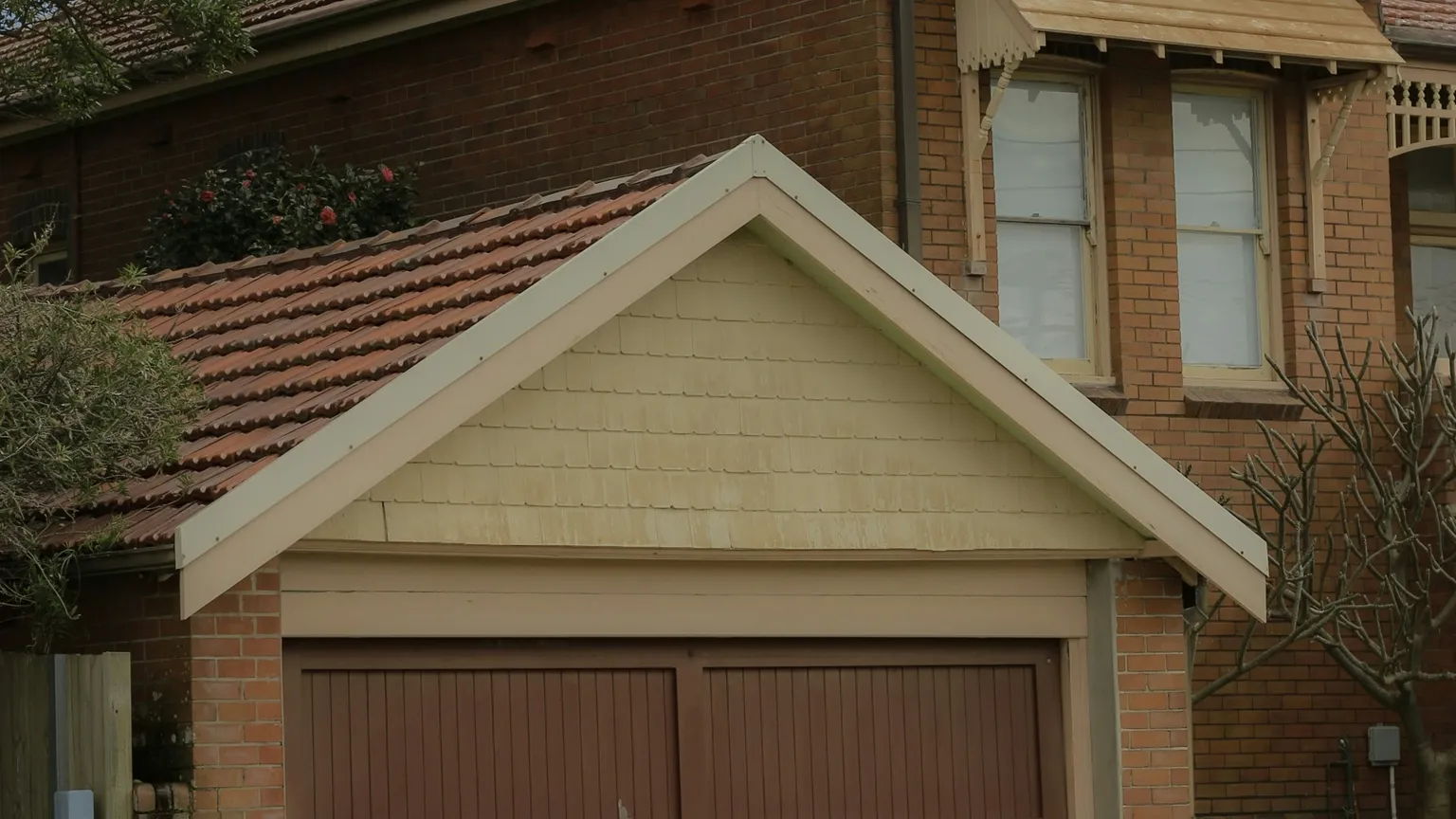
Image credit: ANGIE BAONGOC / Unsplash. Illustrative photograph. Source · Licence Cropped and resized from the original; no content retouching.
Sources and boundaries
Sources checked 30 October 2026.
- NSW Government / NSW Fair Trading — Loose-fill Asbestos Insulation register — Checked 30 October 2026. Supports the specific register's scope, substantial-evidence listings, explicit nonappearance warning, unpublished negative-test information, other-asbestos exclusion and removal/footprint-clearance explanation. No particular address was searched or cleared for this article.
- NSW Government / NSW Fair Trading — Testing your property for loose-fill asbestos insulation — Checked 30 October 2026. Supports inability to confirm visually, licensed assessor sampling, NATA-accredited laboratory testing and warning against untrained roof-cavity sampling. Does not establish a property's condition, a universal inspection scope, price or turnaround.
- NSW Planning — Circular PS 21-035: Planning certificates, loose-fill asbestos material — Checked 30 October 2026. Issued 2 December 2021 and revised 10 August 2023. Guidance on section 10.7(2) listing disclosure, discretionary section 10.7(5) information and former listings following removal. Not a new 2026 announcement, a council-specific determination or legal advice about a particular sale.
Official NSW Government register/testing pages and NSW Planning circular retrieved and checked on 30 October 2026. NSW residential loose-fill asbestos insulation register and pre-purchase evidence only; no individual council rules, property assessment, address-search result, general demolition procedure, whole-site contamination clearance or other jurisdiction's register is asserted. The circular is older published guidance, not a newly commenced measure. Direct current-legislation retrieval was obstructed and did not verify the relevant provisions; no independent statutory consolidation check is claimed. Have the property solicitor or conveyancer confirm current law, certificate requirements and contract consequences for the transaction, and the licensed asbestos assessor confirm the technical evidence and its limits. Report-review and feasibility steps are practical decision guidance, not prescribed universal legal duties. Costs, access, scope and timing depend on the site and agreed professional engagement.
General educational information only, not personalised legal, safety, environmental, building, planning or financial advice. Do not enter roof cavities or disturb suspected insulation to investigate it yourself. Obtain site-specific advice from a NSW licensed asbestos assessor and a property solicitor or conveyancer before relying on records or committing to a purchase.
 Learn with Jason & AmyBuild practical small-scale property development skills with experienced mentors.Enquire now
Rate this article
Guest rating: select 1 star for poor or 5 stars for great. No account is required.
Leave a comment
Join the discussion. Your email address will not be published.
Frequently asked questions
The agent sent a no-match screenshot. What should I request next?
Ask your solicitor or conveyancer to confirm the address searched against the contract property and request any actual testing or remediation reports and relevant council records. A screenshot does not establish whether testing occurred. Have a licensed asbestos assessor review the technical evidence before relying on it.
The seller says testing was negative but has only an email. Is that enough?
Request the underlying assessor and laboratory reports. Ask your licensed asbestos assessor to explain the sampling locations, date, access limitations and relevance to the proposed works. Do not extend a result beyond the material and locations it actually assessed.
Does removal from the register mean the entire block is free of asbestos?
No. The NSW register guidance describes clearance for loose-fill asbestos insulation within the affected premises' footprint. Obtain the clearance and remediation records and have the assessor explain their coverage. Delisting is not a general certificate for all asbestos or other contamination across the lot.
Can my building inspector identify loose-fill asbestos by looking at the insulation?
NSW Government guidance says visual inspection cannot confirm it. The described pathway uses a licensed asbestos assessor to take samples and a NATA-accredited laboratory to test them. Confirm the specialist scope rather than assuming an ordinary building inspection includes this work.
What if the seller will not allow testing before the purchase deadline?
Tell your property solicitor or conveyancer and licensed asbestos assessor immediately. Ask what can be established from existing records, what remains unresolved and whether different access or contract arrangements can be negotiated. Do not assume an automatic testing right, extension or exit; if evidence remains missing, the purchase decision must acknowledge that uncertainty.
Loading comments…