
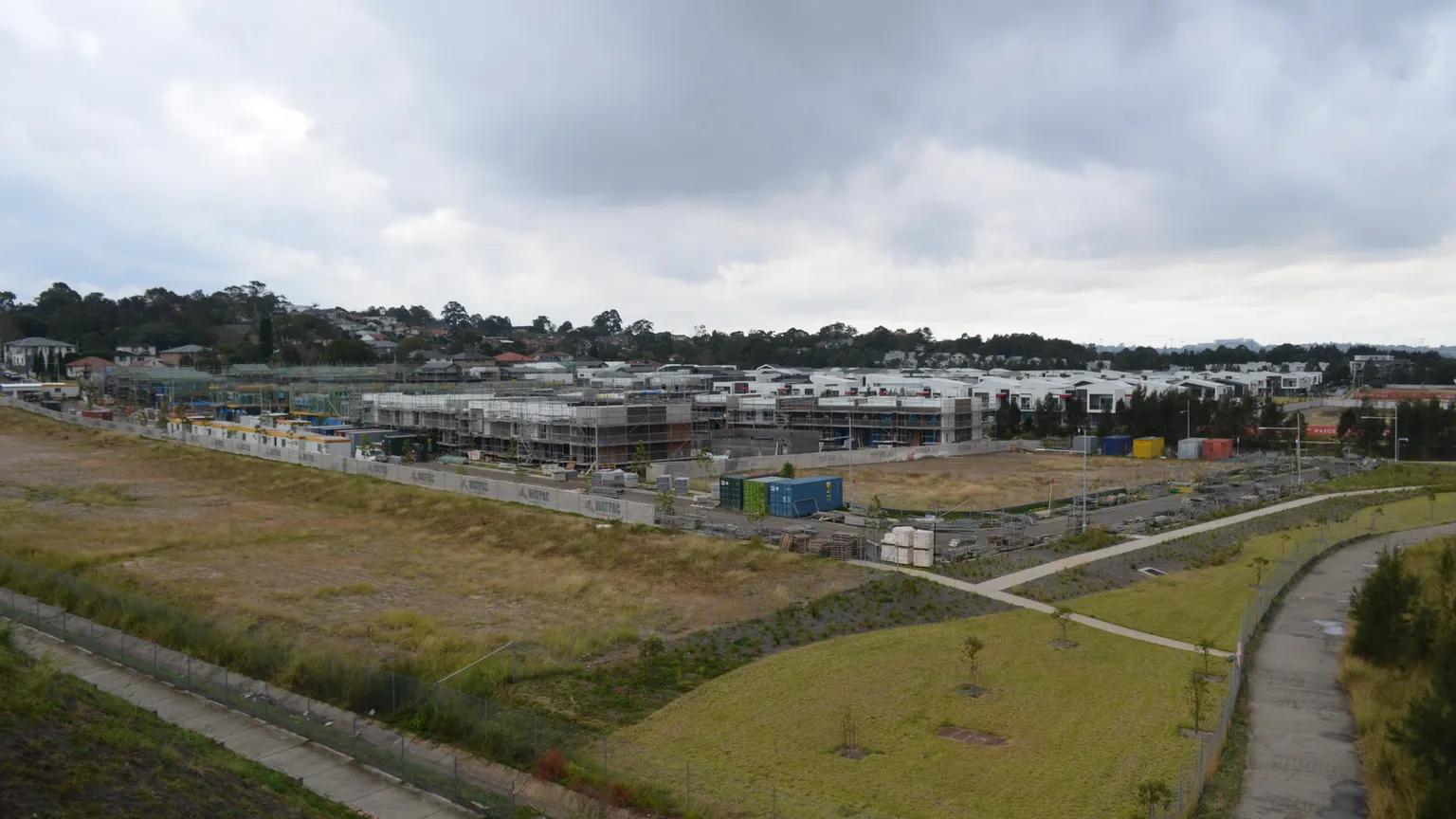
The civil works are finished. The surveyor has pegged the lots, the kerbs are in, and the plan of subdivision has been through the approval process. Then the settlement dates on three of the lots quietly move, and the reason has nothing to do with the buyers. The titles have not issued, because the documentation the council requires before it releases the subdivision certificate is incomplete.
This is one of the most avoidable delays in small-scale subdivision, and it is nearly always a sequencing problem rather than a construction problem.
The deal question: what has to be proved before titles issue?
In New South Wales, subdivision work is generally carried out under a subdivision works certificate, and the plan of subdivision is registered when a subdivision certificate is issued. Wollondilly Shire Council's developer information sets out the distinction clearly: a subdivision works certificate is issued at the start of construction, before any subdivision works begin, while a subdivision certificate is issued at the end and authorises registration of the plan of subdivision under Part 23 of the Conveyancing Act 1919.
The consequence is the important part. Settlement of individual lots follows registration. So every day between practical completion of the works and the issue of the subdivision certificate is a day your money is out and nothing is selling.
What works-as-executed documentation actually is
Works-as-executed plans are certified drawings and digital data showing what was built rather than what was designed. Wollondilly requires as-constructed information on new and upgraded infrastructure, submitted at completion of the works and including both works-as-executed plans and an accompanying digital file. The same page describes the purpose plainly: on completion of physical works, before asset handover and issue of a subdivision certificate, the works-as-executed bundle is provided to council to confirm the quality of works, record asset locations and alignments, and note approved changes made during construction.
Griffith City Council's engineering guidelines show the level of detail expected, listing items such as the location and footprint of any site fill, the natural surface levels, the finished surface levels and the compaction achieved, along with constructed invert levels of drainage lines and pipe dimensions. That is engineering evidence, and it has to be genuine: it is certified.
Who prepares it, and why the two certifications differ
Two different professionals sign two different things, and confusing them causes delay.
- The registered surveyor surveys the constructed levels and prepares and certifies the plan of survey and the summary of as-constructed levels.
- The civil engineer prepares the amended works-as-executed drawings, marking up the approved design to show exactly where the built works departed from it, and certifies the works against the approved design.
Tweed Shire Council's Development Design Specification D13 requires civil plans for earthworks, roadworks, drainage, water and sewerage to be certified by a professional civil engineer with current registration, or by a registered surveyor, and its works-as-executed requirements include showing areas of filling, depth of fill and pre-existing surface levels. Read that as a warning about the sequence: the surveyor and the engineer both need to be on the job from the start, not summoned at the end.
The checks a capable student would run, in order
- Write the documentation requirement into the programme on day one. Ask the certifier or council, in writing, for the complete list of what must be lodged before a subdivision certificate can issue for this subdivision, and in what format.
- Name the surveyor and the engineer before construction starts. Confirm who will certify the design, who will survey the constructed works, and who will certify the as-constructed set.
- Hold inspection points during construction. Works that get covered up cannot be surveyed afterwards. Levels and services have to be captured as they are built.
- Ask about digital data on day one, not at the end. Where an authority requires a compliant digital file with the works-as-executed plans, that requirement is best met by the surveyor and engineer using compatible software from the beginning.
- Keep the certification and the construction records together. Compaction results, pipe records and level data are the substantiation behind the certificate, and they are far harder to assemble months after the work was done.
The trap: treating the certificate as paperwork
The trap is assuming the certificate is an administrative step that follows automatically once the works are complete. It does not. It depends on certified evidence that has to be produced by other people, and those people have other jobs. A surveyor booked at the last minute adds weeks.
The second version of the trap is deferring works against a bond and assuming the certificate still issues on time. Where works are deferred, the documentation must describe what was actually completed, and further documentation may be required when the deferred work is finished. A deferred item is a future obligation with a future evidence requirement attached to it.
What it costs in time and money
Survey, engineering certification and digital data preparation are all real costs, and they should be in the feasibility from the beginning rather than discovered at completion. The larger cost is the delay: while the certificate is outstanding, the lots cannot be registered or settled, so the development loan keeps accruing interest against completed product that cannot be sold. That is the number to put in the risk column when you are deciding whether the programme is realistic.
The Think Property Club lesson
A subdivision is not finished when the builders leave. It is finished when the evidence is complete and the titles exist. The deal-maker's job is to keep the certification chain visible: who certifies what, by when, and what has to be captured before it is buried. You are not expected to prepare any of this yourself. You are expected to know it has to be asked for, and to brief the registered surveyor and the civil engineer so the technical work is done properly and on time.
Your next actions before you price the project
- Ask the consent authority or certifier for the full subdivision certificate lodgement list, in writing, and programme it backwards from your first planned settlement.
- Confirm in the contract which consultant certifies the design and which certifies the as-constructed works, and get both engaged before earthworks begin.
- Identify every inspection hold point at which levels or services will be covered up, and make those captures a condition of the builder's programme.
- Budget the survey, certification and digital data preparation as named line items, and add a realistic allowance for the time between practical completion and certificate issue.
Sources and boundaries
Sources checked 29 September 2026. Jurisdiction and limits: New South Wales information. The examples are drawn from published material of Wollondilly Shire Council and Tweed Shire Council, and each applies only within that council's area and only in the version current at the time of use. The statutory reference to a Subdivision Works Certificate under section 6.13 of the Environmental Planning and Assessment Act 1979 and to registration of a plan of subdivision under Part 23 of the Conveyancing Act 1919 comes from the Wollondilly Shire Council developer information page and must be checked against the current NSW legislation. Requirements for as-constructed digital data, inspection hold points, bonds, fees and certification differ between councils and between projects, and other states and territories have their own regimes.
- Wollondilly Shire Council — Developers Information. Used for: Subdivision Works Certificate and Subdivision Certificate; works-as-executed and ADAC requirements (Checked 29 September 2026)
- Tweed Shire Council — Development Design Specification D13, Engineering Plans (Subdivisions). Used for: AHD levels, works-as-executed plan content, and civil design certification requirements (Checked 29 September 2026)
- Griffith City Council — Engineering Guidelines, Subdivision Development Standards. Used for: Works-as-executed plan content including site fill, natural surface levels and compaction achieved (Checked 29 September 2026)
This article is general education, not personalised planning, legal, financial, tax, privacy, safety or building advice. Requirements and outcomes vary by jurisdiction, site, contract, structure and circumstances. Check current information with the relevant authority and appropriately qualified advisers.
 Learn with Jason & AmyBuild practical small-scale property development skills with experienced mentors.Enquire now
Rate this article
Guest rating: select 1 star for poor or 5 stars for great. No account is required.
Leave a comment
Join the discussion. Your email address will not be published.
Frequently asked questions
What are works-as-executed plans?
They are certified drawings and survey data showing what was actually built, not what was designed. Wollondilly Shire Council describes the bundle as including works-as-executed plans and an accompanying digital file that together confirm the quality of works and record the location and alignment of the assets.
Why does the subdivision certificate depend on them?
Because the certificate is the document that allows the plan of subdivision to be registered, and the council or certifier has to be satisfied the works it is taking over match what it approved. On completion of physical works, and before asset handover and issue of a subdivision certificate, the works-as-executed bundle is provided to council.
What do the plans have to show?
Typically the constructed levels and geometry of roads, drainage and services, any departures from the approved design, and for site filling the natural surface levels, finished surface levels, the extent of fill and the compaction achieved. Griffith City Council's engineering guidelines list these items as part of the works-as-executed requirement.
Who prepares and certifies them?
Usually the same engineering consultancy that prepared the subdivision works drawings, together with the registered surveyor, who signs the levels and the plan of survey. Tweed Shire Council's specification requires civil design plans to be certified by a professional civil engineer with current registration or by a registered surveyor.
Can I settle lots before the certificate issues?
No. The certificate is what authorises registration of the plan, and settlement of individual lots follows registration. That is why the documentation is worth tracking as a cash-flow item from the start of construction, not as paperwork at the end.
Photo: Saberwyn, CC BY-SA 3.0, via Wikimedia Commons.
Loading comments…