Victoria’s 60 Train and Tram Zones: Test the Uplift and Buy with Discipline
A place inside one of Victoria’s train and tram activity centres can look like automatic uplift, but a broad planning strategy does not make every parcel a development deal. Informed developers look beneath the centre name and test the legal controls, infrastructure, buildable yield and buyer demand before paying for potential. That is how a promising location becomes a manageable acquisition decision rather than an expensive assumption.
Use the program to focus your search
The Victorian Government says plans for 60 centres have been finalised and the program aims to encourage more than 300,000 homes around Melbourne’s train and tram lines, jobs and services by 2051. The program page was updated on 26 August 2026. That strategic direction gives developers a defined field to investigate, but it does not replace parcel-level due diligence or guarantee a development margin.
Start with the control applying to the actual parcel
A property inside a named activity centre is not automatically entitled to the maximum height or density promoted in broad program material. Map the parcel against the gazetted zone, overlays, precinct boundaries and any site-specific provisions. Ask a planner to identify the pathway that applies on the acquisition date. When the legal controls and the sales pitch diverge, price the site from the controls.
Run the transport-and-services reality check
Proximity to a station or tram stop helps only when the site can also support safe access, waste collection, fire services, loading, utilities and a buildable basement or parking response. Obtain early advice on sewer, power and stormwater capacity rather than treating infrastructure as a post-settlement problem. A connected location is valuable, but a deliverable scheme is what your feasibility must fund.
Build three yields—and trust the conservative one
Model a planning yield, a design yield and a conservative finance yield. The last should reflect net saleable area after cores, setbacks, circulation, deep soil, communal space and services. Then test price escalation, finance cost, program and slower presales, because these pressures can erase a paper uplift quickly. This layered approach gives you a clear reason to advance, renegotiate or reject the acquisition.
TPC deal lens: buy evidence and optionality together
The strongest opportunity is often a regular site with a clear control, manageable neighbours and proven buyer demand—not the parcel carrying the most ambitious agent brochure. Seek the site where planning, design, services and market depth reinforce one another. Your confidence grows when your due diligence improves: if the evidence holds under conservative assumptions, take the next disciplined step; if it does not, renegotiate or keep searching.
Your Victorian activity-centre acquisition checklist
- Map the exact parcel against the gazetted zone, overlays, precinct boundary and site-specific provisions.
- Obtain written planning advice on the pathway applying at the acquisition date.
- Check access, waste, fire services, loading, sewer, power, stormwater and basement or parking constraints.
- Prepare planning, design and conservative finance yields rather than relying on one headline yield.
- Test local buyer demand, achievable prices, presales pace, escalation, program and finance cost.
- Record all assumptions and have a property lawyer protect unresolved due diligence where appropriate.
- Recheck the controls, service advice and feasibility before settlement and lodgement.
Key Takeaway
Investigate the gazetted planning scheme, zone and overlay maps, precinct boundaries, title, easements, service information and a realistic concept for the exact parcel—not the centre in general. Obtain written, site-specific professional advice from a planner, architect or designer, surveyor, service engineers, quantity surveyor, market adviser, finance adviser and property lawyer as the deal requires. Early due diligence reveals whether a constraint can be designed around, resolved through servicing, protected by contract conditions, negotiated with the vendor or reflected in the purchase price before you pay for theoretical uplift.
Successful developers do not ignore planning, infrastructure or market risk because a location has a compelling story. They identify what applies to the parcel, understand its effect on yield and margin, and manage it before committing capital.
Your Turn
What would you verify first before deciding whether a parcel inside a Victorian train or tram activity centre deserves an uplift in your acquisition price?
Sources and image record
- Victorian Government — Train and Tram Zone Activity Centres Program — accessed 29 August 2026.
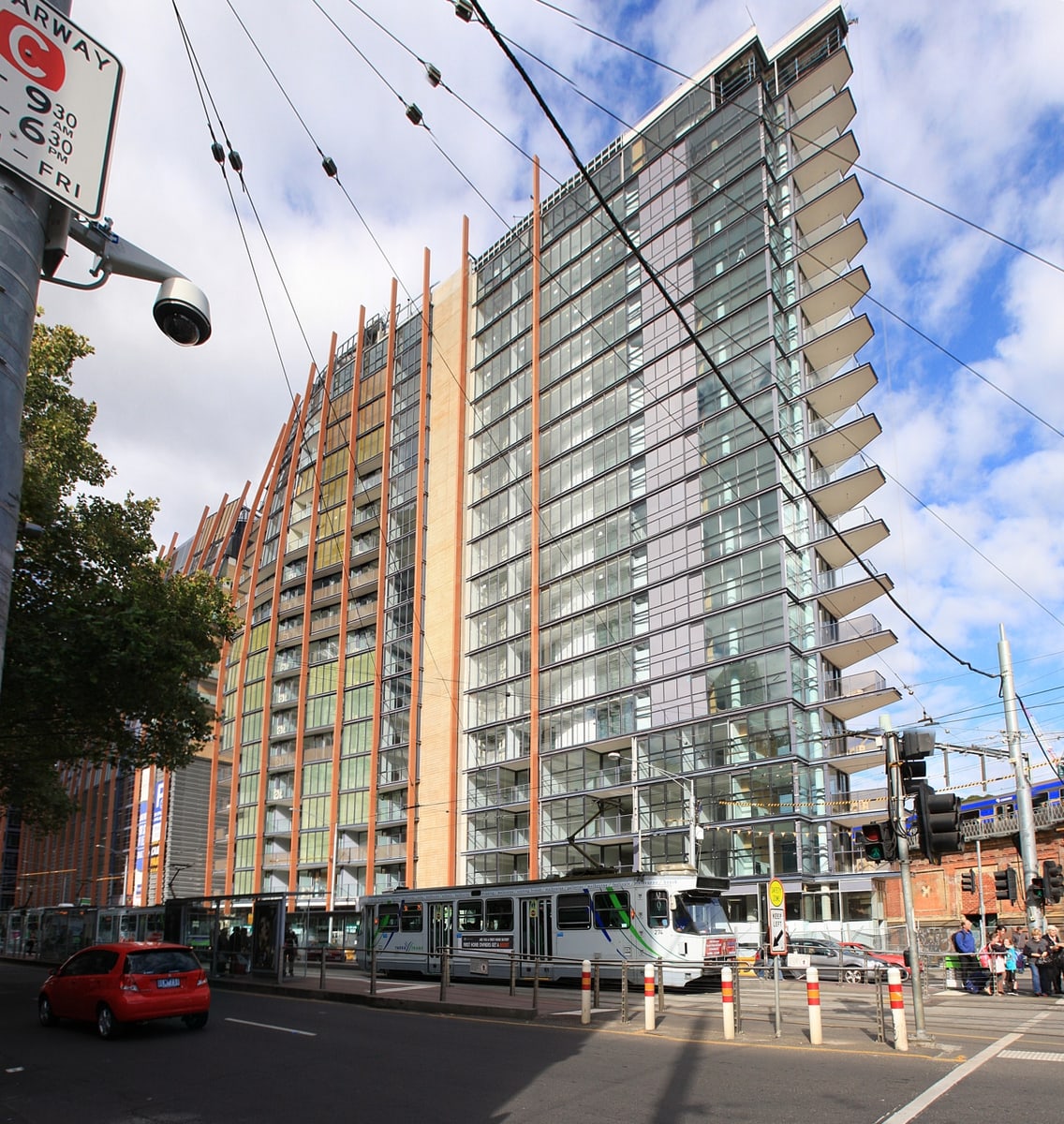
- Feature photograph: “Trams & abodements in melb” by Adam.J.W.C. Exact source page. Licence: Creative Commons Attribution-ShareAlike 2.5. Accessed 30 August 2026. Required attribution: “Apartments and tram in Melbourne. Photo by Adam.J.W.C., licensed under CC BY-SA 2.5, via Wikimedia Commons.” Resized and compressed for web; no compositional edits.

General educational information only. Obtain independent legal, financial, tax, planning and building advice for the specific property and proposal.
Frequently asked questions
What should investors know about Use the program to focus your search?
The Victorian Government says plans for 60 centres have been finalised and the program aims to encourage more than 300,000 homes around Melbourne’s train and tram lines, jobs and services by 2051. The program page was updated on 26 August 2026. That strategic direction gives developers a defined field to investigate, but it does not replace parcel-level due diligence or guarantee a development margin.
What should investors know about Start with the control applying to the actual parcel?
A property inside a named activity centre is not automatically entitled to the maximum height or density promoted in broad program material. Map the parcel against the gazetted zone, overlays, precinct boundaries and any site-specific provisions. Ask a planner to identify the pathway that applies on the acquisition date. When the legal controls and the sales pitch diverge, price the site from the controls.
What should investors know about Run the transport-and-services reality check?
Proximity to a station or tram stop helps only when the site can also support safe access, waste collection, fire services, loading, utilities and a buildable basement or parking response. Obtain early advice on sewer, power and stormwater capacity rather than treating infrastructure as a post-settlement problem. A connected location is valuable, but a deliverable scheme is what your feasibility must fund.
What should investors know about Build three yields—and trust the conservative one?
Model a planning yield, a design yield and a conservative finance yield. The last should reflect net saleable area after cores, setbacks, circulation, deep soil, communal space and services. Then test price escalation, finance cost, program and slower presales, because these pressures can erase a paper uplift quickly. This layered approach gives you a clear reason to advance, renegotiate or reject the acquisition.
What should investors know about TPC deal lens: buy evidence and optionality together?
The strongest opportunity is often a regular site with a clear control, manageable neighbours and proven buyer demand—not the parcel carrying the most ambitious agent brochure. Seek the site where planning, design, services and market depth reinforce one another. If the evidence holds under conservative assumptions, take the next disciplined step. If it does not, keep your standards and keep searching.
Rate this article
How useful did you find this article? 1 is poor and 5 is great.
Join the conversation
Your email address will not be published.
Loading comments…