A statewide policy review can make whole corridors look newly attractive, but the smart opportunity is not in guessing which map will move next. It is in understanding how housing, hazards, infrastructure and assessment rules may interact, then testing sites against both today’s controls and a disciplined future scenario.
What Queensland is proposing
Queensland released a draft replacement State Planning Policy on 28 August 2026, with consultation open until 11.59 pm on 26 October 2026. The draft is not an approval and does not replace the current policy while consultation and implementation work continue.
The draft proposes six strategic aspirations, a strengthened Housing state interest, new standalone interests for Employment Land, Energy and Water, and a new Environment, Heritage and Efficient Growth interest. It also proposes moving state assessment benchmarks from the policy into the Planning Regulation 2017, alongside future guidance and transitional arrangements.
Housing opportunity needs an infrastructure test
The draft promotes serviced residential land, a wider mix of dwelling types and higher-density or mixed-use development around centres and transport corridors. Those directions can guide an acquisition search, but they do not create trunk capacity, a local planning approval or market demand. Confirm water, sewer, stormwater, transport, power and community-infrastructure capacity with the responsible entities.
Model who pays for augmentation, when it can be delivered and whether the project can stage around a constraint. A planning direction is valuable only when the land can become serviced, approved, built and absorbed on terms the feasibility can carry.
Natural hazards become a sharper design question
The draft describes a risk-based approach that would avoid development where risk cannot be managed to an acceptable or tolerable level, while considering proportionate responses elsewhere. For developers, that means flood, bushfire, coastal erosion, landslide, acid sulfate soil and evacuation issues should move to the front of site screening rather than remain late consultant reports.
Order current hazard mapping, a site survey and specialist advice before estimating yield. If a safe development envelope remains, the issue may be managed through siting, levels, access, landscape design, construction methodology or a reduced yield. If it does not, the purchase price must not pretend the constraint is temporary.
Protect both sides of land-use compatibility
The draft continues to protect industrial land, freight corridors, airports, ports, resource areas, agriculture and environmental values from incompatible development. A housing site near jobs and transport may still carry noise, air-quality, safety, buffer or operational-interface requirements. Test both the opportunity and the protected activity; one cannot be assessed honestly without the other.
TPC deal lens: run a two-policy feasibility
Prepare a base case under the instruments in force and a separately labelled scenario reflecting relevant draft directions. Do not pay for the scenario as though it is an entitlement. If the project works under current controls and the draft creates additional upside, that is a stronger position than relying on policy change to rescue a weak deal. Your confidence grows when your due diligence improves.
Your Queensland action checklist
- Read the draft policy, fact sheets and consultation material relevant to the site.
- Confirm current zoning, overlays, assessment pathway and applicable state referral triggers.
- Obtain written servicing and infrastructure advice, including timing and augmentation responsibility.
- Map natural hazards, environmental values, heritage, resource and transport-interface constraints.
- Test housing type and density against local demand rather than statewide population headlines.
- Build separate current-policy and draft-policy feasibility scenarios.
- Use contract conditions and pricing that do not depend on an uncertain policy outcome.
Key Takeaway
Investigate the draft and current State Planning Policy, the Planning Regulation, the local planning scheme, title, survey, hazard mapping and written servicing information. Ask a Queensland town planner, civil engineer, surveyor, hazard specialist and property lawyer to test the actual site and approval pathway. Early due diligence shows whether an issue can be designed around, staged, negotiated with an infrastructure provider, protected through contract terms or reflected in the purchase price.
Successful developers do not ignore uncertainty or treat a consultation document as permission. They identify what is current, understand what is proposed and manage the gap with evidence.
Your Turn
Would you pay for draft-policy upside, or investigate whether the site already works under today’s controls?
Sources and image record
- Queensland Planning — State Planning Policy review and consultation, updated 28 August 2026; accessed 31 August 2026.
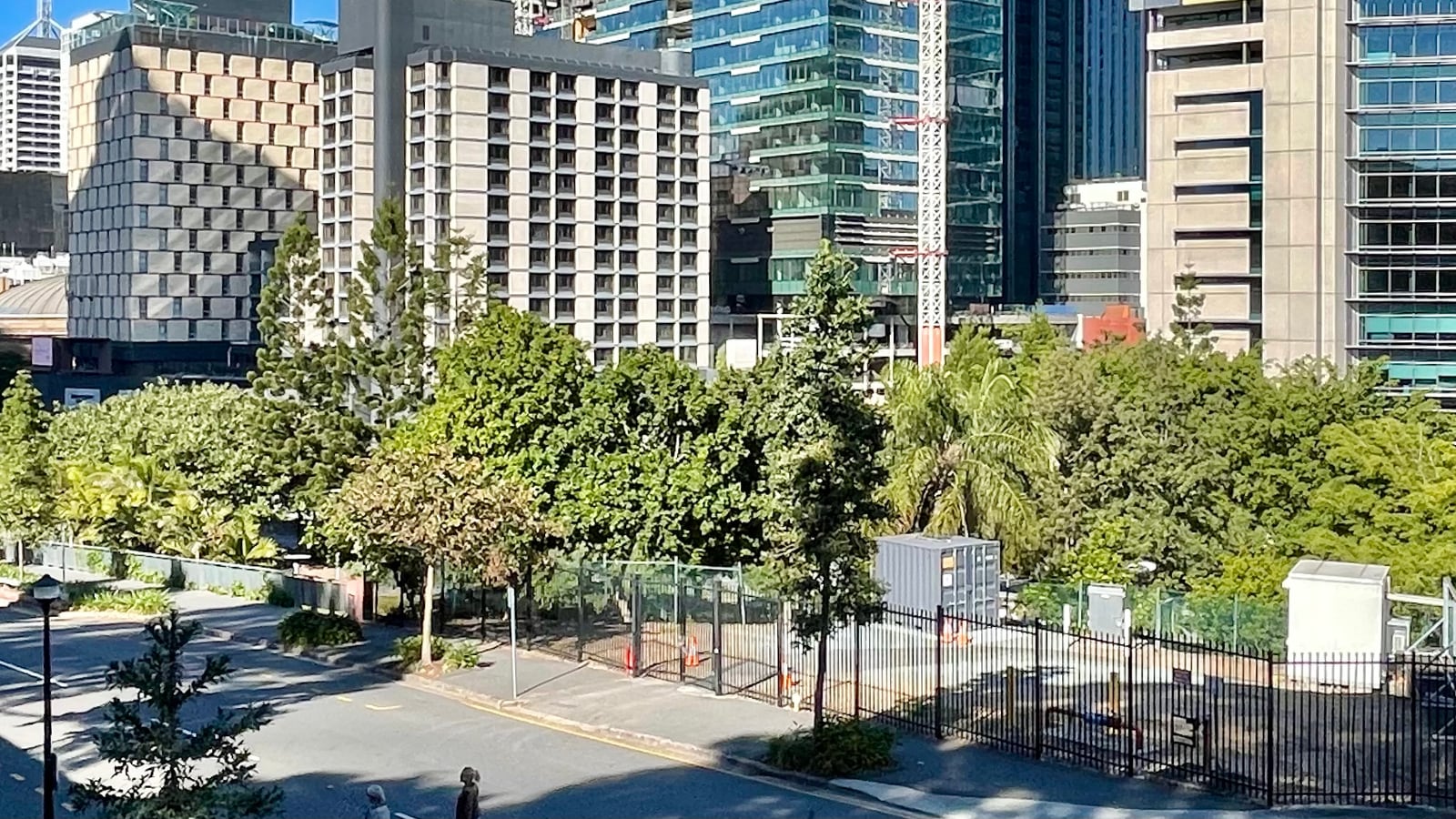
- Feature photograph: “Construction of 80 Ann Street and The One, Brisbane, June 2021.jpg” by Kgbo. Exact source page. Licence: CC BY-SA 4.0. Accessed 31 August 2026. Cropped and resized for web; adapted image remains under CC BY-SA 4.0.

General educational information only. Obtain independent legal, financial, tax, planning and building advice for the specific property and proposal.
Frequently asked questions
What should investors know about What Queensland is proposing?
Queensland released a draft replacement State Planning Policy on 28 August 2026, with consultation open until 11.59 pm on 26 October 2026. The draft is not an approval and does not replace the current policy while consultation and implementation work continue.
What should investors know about Housing opportunity needs an infrastructure test?
The draft promotes serviced residential land, a wider mix of dwelling types and higher-density or mixed-use development around centres and transport corridors. Those directions can guide an acquisition search, but they do not create trunk capacity, a local planning approval or market demand. Confirm water, sewer, stormwater, transport, power and community-infrastructure capacity with the responsible entities.
What should investors know about Natural hazards become a sharper design question?
The draft describes a risk-based approach that would avoid development where risk cannot be managed to an acceptable or tolerable level, while considering proportionate responses elsewhere. For developers, that means flood, bushfire, coastal erosion, landslide, acid sulfate soil and evacuation issues should move to the front of site screening rather than remain late consultant reports.
What should investors know about Protect both sides of land-use compatibility?
The draft continues to protect industrial land, freight corridors, airports, ports, resource areas, agriculture and environmental values from incompatible development. A housing site near jobs and transport may still carry noise, air-quality, safety, buffer or operational-interface requirements. Test both the opportunity and the protected activity; one cannot be assessed honestly without the other.
What should investors know about TPC deal lens: run a two-policy feasibility?
Prepare a base case under the instruments in force and a separately labelled scenario reflecting relevant draft directions. Do not pay for the scenario as though it is an entitlement. If the project works under current controls and the draft creates additional upside, that is a stronger position than relying on policy change to rescue a weak deal. Your confidence grows when your due diligence improves.
Rate this article
How useful did you find this article? 1 is poor and 5 is great.
Join the conversation
Your email address will not be published.
Loading comments…