
Protection Work Next Door: Price the notices and insurance before the excavation
Excavation is where a friendly neighbour becomes a legal counterparty.
The moment your works go close to a boundary or below the level of the adjoining footings, the question stops being a construction preference and becomes a statutory process. In Victoria that process has fixed steps, fixed timeframes and an insurance obligation that ordinary construction cover may not satisfy.
The obligation sits with the owner, not the builder
The Victorian Building Authority explains that an owner proposing building work has obligations to protect adjoining property from potential damage from that work. When you apply for a building permit you provide detailed information about the proposal to the relevant building surveyor, who then determines whether protection work is required.
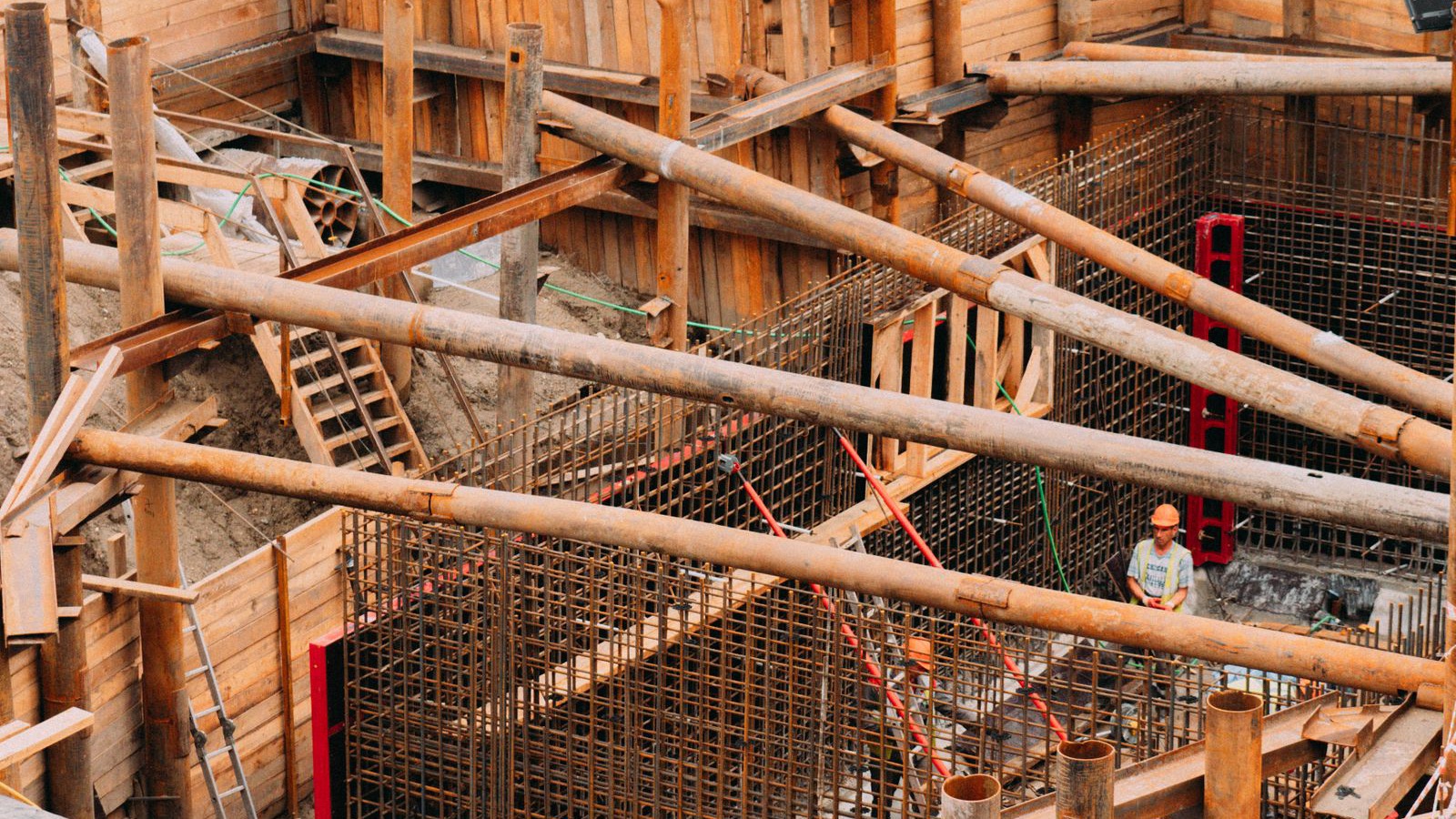
Protection work is not limited to physical props and shoring. The regulator's definition covers underpinning of footings including vertical and lateral support, ground anchors, shoring up and overhead protection, and any other work designed to maintain the stability of the adjoining property. Adjoining property is defined broadly enough to include a street, lane, footpath, alley or right of way at risk of significant damage.
The critical scheduling point is that the building permit may not be issued until the protection work process has been completed to the building surveyor's approval. This is a permit gate, not a site instruction.
The notice, the response and the deemed agreement
If protection work is required, the owner must serve a notice on the adjoining owner with details of the proposed work. Under the Victorian framework this is the Form 7 protection work notice, and the adjoining owner responds using Form 8.
The adjoining owner has 14 days from service to respond. They can agree, disagree, or request further information. If they fail to respond in the required time, they are taken to have agreed to the proposed protection work. If they disagree, the building surveyor examines the proposal and determines whether it is appropriate, and notifies both parties in writing. Either party may appeal to the Building Appeals Board within 14 days of that determination.
Read that sequence again as a programme risk. Fourteen days for a response, a determination, and potentially fourteen days for an appeal is a month of permit-critical time that is outside your control.
The insurance obligation that catches people out
The owner must ensure a contract of insurance is in force against potential damage caused by the proposed protection work to the adjoining property. The policy must protect the adjoining property, its occupiers and the general public during the works and for a period of 12 months following completion, and a copy must be provided to the adjoining owner before building work starts.
The Victorian guidance specifically notes that a standard construction and public liability policy will not normally provide the minimum cover required. Assume you need a separate arrangement until an insurance adviser confirms otherwise in writing.
The adjoining property survey is your evidence baseline
A survey of the adjoining property must be prepared by the owner with the adjoining owner. It should record all existing cracks and defects, and it must be signed or acknowledged as an agreed record of the condition of the property before protection work begins.
Without that signed baseline, every crack in the neighbour's render becomes a dispute about causation. With it, the argument starts from an agreed position.
The pre-purchase protection work test
Run this before you exchange, not after you appoint a builder:
- How close is the excavation to the boundary and to the neighbouring footings? Distance and depth relative to the adjoining footing level drive whether the surveyor will require protection work.
- What is the adjoining property's condition today? Older masonry, existing cracking and previous unauthorised works all raise the risk profile.
- Who is on the other side, and are they contactable? Absentee owners, deceased estates and company owners can stretch the 14-day cycle into weeks of locating people.
- Does the programme include the notice and response window? If the construction programme starts the day after permit issue, protection work has not been scheduled.
- Who is arranging the protection work insurance, and is it quoted? Get a written quote rather than assuming the builder's policy covers it.
- Who prepares the adjoining property survey, and who pays? The owner is required by law to pay the adjoining owner's expenses, including specialist fees and on-site supervision costs.
The TPC deal lens
Test the deal like this: add protection work design, the adjoining property survey, separate insurance cover, the neighbour's specialist fees and at least a month of permit-critical delay to the site works budget and programme. Does the project still clear your margin hurdle?
If the answer depends on the surveyor deciding protection work is not required, you do not have a margin. You have a hope. Price the risk as though the determination goes against you, and treat a lighter outcome as upside rather than the plan.
Key Takeaway
Excavating near a boundary can trigger a statutory protection work process that gates your building permit, requires a separate insurance contract and demands a signed record of the neighbour's existing condition. In Victoria, price the notices, the insurance and the appeal window before you buy, not after the excavator arrives.
Your Turn
On your next site with a boundary excavation, would your programme survive a neighbour who takes the full response period and then appeals the determination?
Sources and boundaries
Sources checked 19 September 2026. Jurisdiction and limits: Victoria is used as the worked example because the protection work notice, response, insurance and survey duties are set out in detail by the Victorian Building Authority and the Building and Plumbing Commission. Other states and territories impose different obligations and different timeframes; confirm the requirements for the state or territory where the site sits.
- Victorian Building Authority — Protecting adjoining properties. Used for: Owner's statutory duty to protect adjoining property, building surveyor's determination that protection work is required, the 14-day response period for a protection work notice, deemed agreement if no response, the insurance contract requirement covering 12 months after completion, and the requirement to prepare a survey recording existing cracks and defects. (Checked 19 September 2026)
- Building and Plumbing Commission (Victoria) — Protecting adjoining properties. Used for: The same protection work regime administered by the Victorian regulator: what protection work includes, the notice process, insurance and the adjoining property survey. (Checked 19 September 2026)
- Victorian Building Authority — Building forms. Used for: Form 6 (determination that protection work is required), Form 7 (protection work notice) and Form 8 (protection work response notice) under the Building Regulations. (Checked 19 September 2026)
- Victorian Building Authority — Protection Work Approved Statement. Used for: Protection work notice and response notice requirements, regulation 113 content requirements for Form 7, deemed agreement where an adjoining owner does not respond in time, and the 14-day appeal window to the Building Appeals Board after a determination. (Checked 19 September 2026)
This article is general education, not personalised planning, legal, financial, tax, privacy, safety or building advice. Requirements and outcomes vary by jurisdiction, site, contract, structure and circumstances. Check current information with the relevant authority and appropriately qualified advisers.
 Learn with Jason & AmyBuild practical small-scale property development skills with experienced mentors.Enquire now
Rate this article
Guest rating: select 1 star for poor or 5 stars for great. No account is required.
Leave a comment
Join the discussion. Your email address will not be published.
Frequently asked questions
When does protection work become a legal requirement?
In Victoria, when you apply for a building permit the relevant building surveyor decides whether protection work is required, based on how close the work is to the boundary and the risk to adjoining property. If protection work is required, the building permit may not be issued until that process is completed to the surveyor's approval.
How long does the neighbour have to respond?
The adjoining owner must respond to a protection work notice within 14 days of it being served. They can agree, disagree or ask for more information. If they do not respond in the required time, they are taken to have agreed to the proposed protection work.
What happens if the neighbour disagrees?
The building surveyor must examine the proposal and determine whether the protection work is appropriate, and must give both parties written notice of the determination. Either party can appeal that determination to the Building Appeals Board within 14 days.
Is ordinary construction insurance enough?
Not necessarily. The Victorian guidance states that a standard construction and public liability policy will not normally provide the minimum cover required. A separate contract of insurance must protect the adjoining property, its occupiers and the public during the works and for 12 months after completion.
What is the survey of adjoining property for?
It is a record of the existing condition of the neighbour's property, including any cracks and defects, prepared with the adjoining owner and signed or acknowledged as agreed before protection work begins. It is the baseline that prevents a pre-existing crack from being blamed on your excavation.
Loading comments…